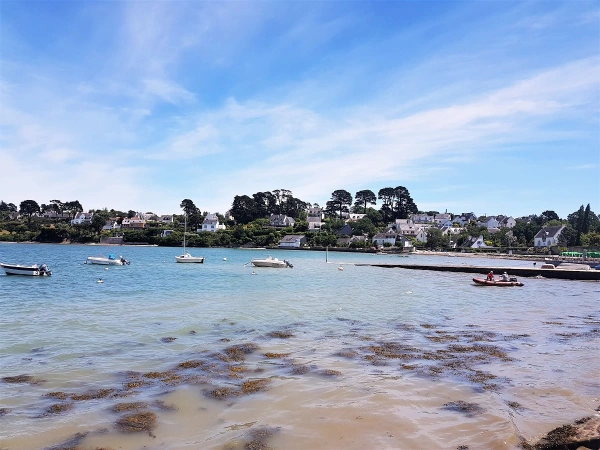
Is Vannes worth a detour on your Brittany trip — or is it just another pretty French town? That question is reasonable to ask. Brittany has no shortage of attractive historic towns, and Vannes doesn’t appear on most first-timer shortlists the way Saint-Malo or Mont-Saint-Michel do. What the city actually offers is a combination that’s genuinely hard to find: a well-preserved medieval walled core, direct access to one of France’s most unusual coastal ecosystems, and a scale that stays human without feeling like a museum piece. Most travelers who seek it out find it delivers. Those who stumble in expecting…
-
-
Are you wondering whether Carnac’s stone alignments are actually worth the detour through rural Brittany? I asked myself the same thing before my first trip. Then I went three times over six years — and each visit revealed something the previous one missed entirely. What Makes Carnac Different From Every Other Megalithic Site Carnac isn’t one site. It’s a landscape. Spread across roughly 4 kilometers of Breton countryside, the Carnac alignments contain over 3,000 standing stones arranged in long parallel rows — the largest concentration of prehistoric standing stones on earth. Nobody built this in a weekend. Construction started around…
-
When Benjamin Franklin set foot on French soil in December 1776 to seek support in the American War of Independence, he came ashore in the tiny Breton port of Saint Goustan. Situated on the banks of the River Loch, adjoining the town of Auray, Saint Goustan is a delightful, picturesque affair. With a cobbled quayside lined with colourful timber-fronted houses, it’s a suitably charming spot for an influential American founding father/writer/politician/inventor/all-round-genius to disembark. Unlike Benjamin Franklin, we ambled into Saint Goustan on foot via a path along the river (above) and as we approached the centre of the medieval port…
-
You’re driving south from Auray toward the Carnac megaliths and a brown tourist sign appears pointing left. Most rental cars keep going. That’s the mistake. Le Bono is a tidal village on the Rivière d’Auray, roughly 5 kilometers south of Auray’s famous Saint-Goustan port. It has a suspension footbridge, a working oyster estuary, and a harbor that looks completely different depending on whether the tide is in or out. It won’t fill a full day. But if you’re spending time around the Gulf of Morbihan and skip it, you’ve left one of the most photogenic corners of Morbihan untouched. Here’s…
-
Is Roscoff worth visiting, or is it just the town you drive through after the ferry docks? Most people never find out. They arrive from Plymouth on the Brittany Ferries crossing, clear customs, and point their car east toward Paris. That’s a reasonable choice — but it means missing one of the most genuinely intact old towns on the Breton coast. Roscoff sits at the far northwest tip of France, in the Finistère department, with a population of roughly 3,500 people. It is, in most respects, a small fishing town. It also happens to have a Renaissance church, a subtropical…
-
Why Brittany Beats Other French Regions for First-Time Visitors Brittany is the right choice. Not the flashiest, not the obvious one — but the right one if you want coastline, history, and food without spending €400 a night or queuing 45 minutes to see a cathedral. Most people default to Provence or the Côte d’Azur. Understandable. But Provence in July is 38°C, crowded, and expensive. The Côte d’Azur is beautiful if you have a boat and a trust fund. Normandy is excellent, but most visitors burn two of their three days at D-Day beaches and leave without seeing the actual…
-
Ho Chi Minh City is Vietnam‘s financial capital. It’s also the country’s most global, most metropolitan city. Otherwise known as Saigon, the city is home to almost 8.5 million people. There’s a noticeable Western influence in the city centre, more so than in other parts of Vietnam, with coffee shops on street corners and a large shopping centre full of well-known high street brands. Our first stop was the Notre Dame Cathedral, an elegant 19th century French-style cathedral covered with red tiles. The cathedral was closed when we arrived, and while it was a shame we couldn’t go inside, it…
-
You’ve booked three nights in Ho Chi Minh City. Everyone says Cu Chi Tunnels is a must-do. So you sign up for a $12 group tour, spend 90 minutes on a bus, squeeze through a tunnel display for two minutes, sit through a grainy 1967 film, and spend the ride back wondering what the fuss was about. That’s the experience most visitors have. It doesn’t have to be yours. The Cu Chi network is genuinely extraordinary — 250 kilometers of underground passages dug by hand, stretching from the outskirts of Saigon to the Cambodian border. What makes it worth your…
-
The Misconception That Ruins the Experience Most visitors arrive at My Son expecting Vietnam’s version of Angkor Wat. They leave disappointed — not because My Son failed them, but because that benchmark was always the wrong one. My Son is not a sprawling temple city. It’s a compact valley complex of Hindu brick towers built by the Cham civilization between the 4th and 14th centuries. At its peak, over 70 structures stood here. Then came August 1969 — a single round of B-52 bombing raids during the Vietnam War destroyed most of what 1,400 years of weathering had left intact.…
-
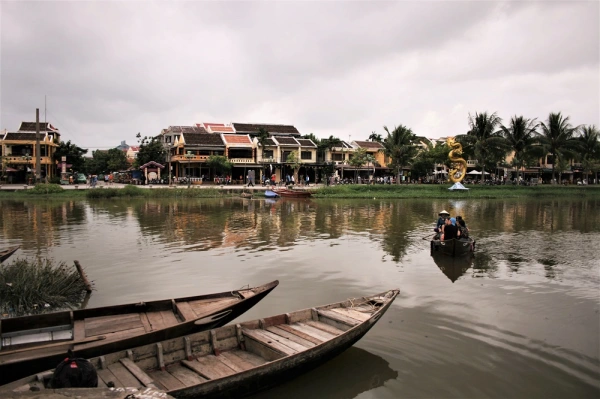
Are you wondering whether Hoi An lives up to the hype — or about to spend a week somewhere that peaked on Instagram three years ago? Fair question. The answer is complicated, so here’s the unsponsored version. This is not a sponsored post. No hotels, tour operators, or tourism boards paid for any of the opinions below. What Hoi An Actually Delivers Hoi An is a UNESCO World Heritage Site on Vietnam’s central coast, about 30 kilometers south of Da Nang. The Ancient Town is genuinely preserved 15th–19th century merchant architecture — not a reconstruction, not a theme park. That’s…