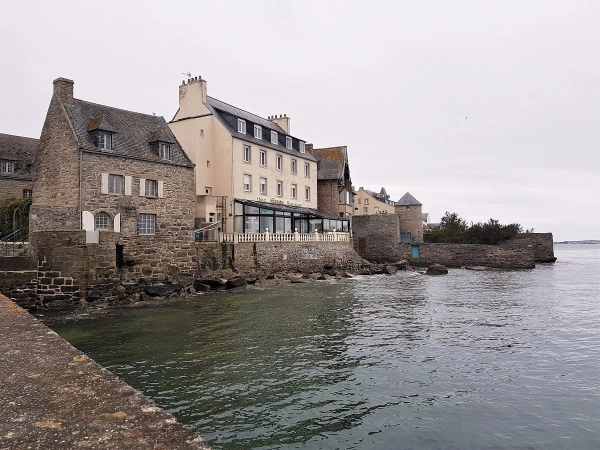
Is Roscoff worth visiting, or is it just the town you drive through after the ferry docks? Most people never find out. They arrive from Plymouth on the Brittany Ferries crossing, clear customs, and point their car east toward Paris. That’s a reasonable choice — but it means missing one of the most genuinely intact old towns on the Breton coast.
Roscoff sits at the far northwest tip of France, in the Finistère department, with a population of roughly 3,500 people. It is, in most respects, a small fishing town. It also happens to have a Renaissance church, a subtropical garden, direct access to an inhabited car-free island, and one Michelin-starred restaurant. The combination is unusual.
Roscoff Is Not Just a Transit Point
Most travelers treat Roscoff as a gateway rather than a destination. That’s a mistake.
The town built its wealth on two things: trade and onions. The “Johnnies” — Roscoff farmers who cycled across Britain in the 19th century selling pink onions door-to-door — became cultural fixtures in Welsh and Scottish coastal towns. The Roscoff pink onion (oignon rose de Roscoff) now holds a Protected Designation of Origin status, placing it in the same legal protection category as a classified Bordeaux wine.
Beyond the onions, Roscoff holds a claim that most French towns don’t: it’s the birthplace of thalassotherapy in France. The Station Biologique de Roscoff, founded in 1872, was the country’s first dedicated marine biology research station. That scientific focus drew early attention to the therapeutic properties of seawater, establishing Roscoff as a serious center for marine-based treatments. The main facility today — Thalasso Roscoff (Les Thermes Marins) — offers multi-day wellness programs using heated seawater, seaweed baths, and hydrojets. Standard 3-day programs typically start around €350–400 per person in mid-season, excluding accommodation.
The town also benefits from an anomalous microclimate. The Gulf Stream keeps Roscoff’s winters unusually mild for its latitude, allowing subtropical plants to grow outdoors — which explains why the Jardin Exotique contains date palms and tree ferns that would die in most of inland Brittany.
None of this is widely marketed. Roscoff doesn’t promote itself aggressively. The ferry traffic provides a steady baseline of visitors regardless. What that means for you: outside July and August, the town is noticeably quiet, accommodation prices are fair, and restaurants are genuinely trying to impress rather than moving covers.
Getting to Roscoff: What the Ferry Routes Actually Look Like
Brittany Ferries operates the passenger and vehicle routes that give Roscoff most of its visitor traffic. Two main UK and Ireland departure points exist, and the logistics differ enough to warrant separate explanations.
Plymouth to Roscoff
This is the most-used crossing. Daytime sailings take approximately 6 hours; overnight sailings run 8–9 hours with cabin accommodation. The MV Pont-Aven and MV Armorique are the primary vessels — both have restaurants, bars, and cabin options ranging from reclining seats to en-suite doubles. A standard cabin on an overnight crossing typically adds £40–80 to the base fare. Total vehicle-plus-two-passengers fares generally range from £200 to £500 depending on season and cabin selection.
The Plymouth route typically runs daily in summer (June–September) and four to six times per week in shoulder months. It does not operate daily year-round. Confirmed schedules are published on the Brittany Ferries website and typically release 10–12 months in advance.
Cork (Ringaskiddy) to Roscoff
Brittany Ferries connects Ireland directly to Brittany on this route. Crossing time is approximately 14 hours, making it an overnight voyage. Frequency is lower — typically two to three sailings per week in summer — so booking at least six to eight weeks ahead is generally advisable for vehicle passengers in peak season.
Arriving Without a Car
The ferry terminal sits about 2.5km east of the town center. A shuttle navette runs in coordination with ferry arrivals and stops near the old port. Confirm the current timetable directly with Brittany Ferries before traveling, as it varies by season and sometimes changes with little notice.
By train: the nearest TGV-served station is Morlaix, 20km away. Paris Montparnasse to Morlaix takes approximately 3.5–4 hours. Local buses on Réseau Penn ar Bed line 15 connect Morlaix to Roscoff, though service runs infrequently outside summer months. Taxis from Morlaix to Roscoff typically cost €30–40.
The Old Town: A Walking Order That Actually Makes Sense
The historic core of Roscoff is compact enough to cover in three to four hours. Here’s a logical sequence that avoids doubling back:
- Église Notre-Dame de Croaz-Batz — Start here. The 16th-century Renaissance belfry is the town’s visual centerpiece. The carved stone ship reliefs on the tower are distinctive and worth close inspection. Entry is free. The interior holds several notable stone altarpieces that survived the Revolution largely intact.
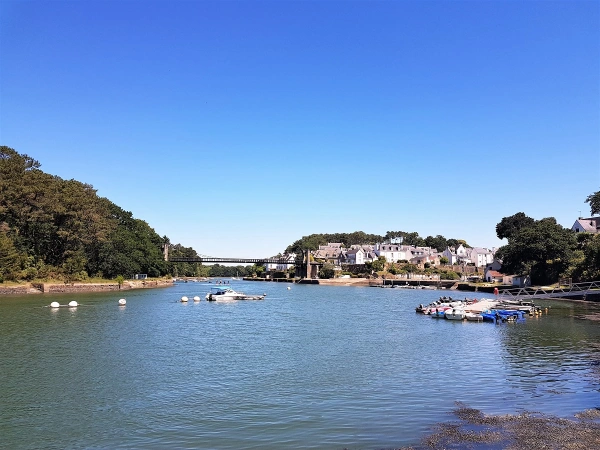
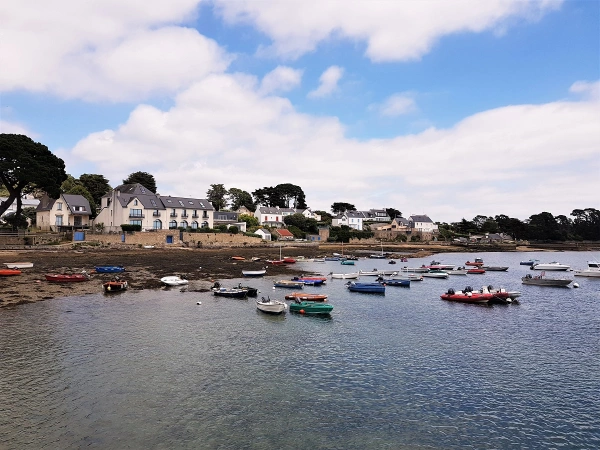
- Vieux Port (Old Port) — Walk north from the church to the harbor. The granite quays and working fishing boats provide the image most associated with Roscoff. Before 8am you may catch boats returning from overnight trips and crates being unloaded. By 10am it’s considerably quieter.
- Rue Gambetta and the merchant houses — The streets immediately south of the harbor contain the best examples of 16th–17th century corsair architecture: corbelled turrets, carved lintels, ship motifs in the stonework. No entry required.
- Jardin Exotique de Roscoff — Originally established by Capuchin monks in 1622, it now contains over 3,000 plant species growing outdoors due to the microclimate. Entry is approximately €6 for adults, €3 for children. Open daily in summer; reduced hours October through March.
- Aquarium Charles Pérez — Run by the Station Biologique de Roscoff, this small aquarium focuses on local Atlantic species. Worth 45 minutes if marine biology interests you. Entry around €5. Easily skipped otherwise.
What to skip: the commercial development east of the old town along the main road. The tourist shops near the ferry terminal sell the same onion-branded merchandise at prices noticeably higher than the Saturday market on Place Lacaze-Duthiers.
Île de Batz: Go. That’s the Whole Recommendation.
A 15-minute ferry crossing from the old port brings you to Île de Batz (pronounced approximately “Bah”). Sixty-five permanent residents. No cars. A lighthouse climbable for €3. A genuinely remarkable tropical garden in a wind-sheltered hollow established by a 19th-century rector who apparently had very ambitious horticultural ambitions and the right microclimate to back them up.
The Vedettes Armoricaines ferry departs from the old port roughly every 30 minutes in summer, less frequently in winter. Adult return fare is approximately €9. The island is walkable end-to-end in about 90 minutes. If you spend two nights in Roscoff and skip this crossing, the trip is materially worse for it.
Where to Eat in Roscoff: Three Honest Answers
What’s the best restaurant, and is the price justified?
Le Temps de Vivre is the clear answer. Chef Jean-Yves Crenn’s one-Michelin-star restaurant sits on the quayside and focuses tightly on Breton seafood and coastal produce. Lunch menus typically run €35–55; evening tasting menus reach €90–120 per person before wine. The room is understated — stone walls, modest furniture — so the pricing is entirely about the cooking, not the setting. Reservations are required and fill quickly in summer; booking three to four weeks ahead is typically necessary for July and August dates.
For those who find those prices steep: the quality of Roscoff’s casual seafood is genuinely high. L’Écume des Jours on the waterfront does reliable fruits de mer platters — crab, langoustines, oysters from local waters — starting around €28. Not a destination meal, but honest and fresh.
Where do locals actually go?
Crêperie Ti Saozon, near the church, is the correct answer. Buckwheat galettes with andouille sausage, local scallops, or a simple egg-butter-cheese combination run €10–15 for a full meal. Avoid the crêperies directly on the tourist waterfront — they’re technically fine but designed for throughput rather than quality, and the difference is noticeable.
Can I buy Roscoff onions to take home?
Yes. The Maison de l’Oignon de Roscoff, on the road toward the ferry terminal, sells packaged pink onions, braided strings (the classic presentation), and other regional products. Onion harvest runs September–October, when they also appear at the Saturday morning market on Place Lacaze-Duthiers. The braided string versions travel reasonably well in checked luggage and are considerably cheaper here than in Paris specialty food shops.
When to Visit Roscoff: Month-by-Month Conditions
The conventional advice is “go in summer.” That’s correct for beach weather. It’s less correct for everything else.
| Month | Avg. Temp (°C) | Crowd Level | Key Notes |
|---|---|---|---|
| May | 14–16 | Low | Gardens fully open; best-value accommodation prices |
| June | 17–19 | Moderate | Long daylight hours; ferry frequency increases; restaurants fully staffed |
| July | 19–21 | High | Peak season; book Le Temps de Vivre and accommodation well in advance |
| August | 19–22 | Very high | Fête de l’Oignon last weekend; French school holidays throughout the month |
| September | 17–19 | Moderate | Onion harvest begins; excellent seafood season; noticeably cheaper than August |
| October | 13–15 | Low | Some restaurants close mid-month; ferry schedule reduces after school half-term |
| Nov–Apr | 8–12 | Very low | Quiet; limited openings; not recommended for first visits without prior knowledge of schedules |
The Fête de l’Oignon takes place on the last weekend of August and is a genuine local event — onion vendors, artisan food producers, traditional Breton music — rather than a performance staged for tourists. It draws significant crowds. If this is your primary reason for visiting, booking accommodation by early May is generally advisable.
September is arguably the most underrated month. Crowds thin after the French school summer ends in late August, restaurant quality tends to be highest during the closing weeks of the season, and the onion harvest adds a specific visual character to the surrounding fields that you won’t see in any other month.
Roscoff vs St-Malo: Choosing Your Brittany Entry Point
Both towns receive ferry traffic and serve as common starting points for Brittany road trips. The comparison is direct enough to warrant a clear side-by-side view.
| Factor | Roscoff | St-Malo |
|---|---|---|
| Ferry origins | Plymouth, Cork — Brittany Ferries | Portsmouth, Poole — Brittany Ferries (seasonal) |
| Town population | ~3,500 | ~46,000 |
| Character | Quiet fishing village; granite old town | Historic walled city; busier year-round |
| Main draws | Old quarter, Île de Batz, thalassotherapy | Intra-muros walls, beaches, Mont Saint-Michel day trips |
| Top restaurant | Le Temps de Vivre (1 Michelin star, ~€90–120 tasting menu) | Multiple options; broader range of price points |
| Nearest landmark | Brest (60km); Morlaix (20km) | Mont Saint-Michel (56km); Rennes (70km) |
| Best suited for | Slow travel, coastal walks, thalasso stays | History, architecture, Mont Saint-Michel logistics |
For independent travelers arriving from Plymouth or Cork who want two to three nights in Brittany before continuing south, Roscoff generally suits those who prefer quiet over spectacle and are content with a smaller activity slate in exchange for a more authentic small-town character.
St-Malo is the stronger choice if you want easier access to Mont Saint-Michel, a more active evening restaurant scene, or a fuller range of activities per day. Neither is categorically the better destination. In most cases, the practical choice follows from which ferry route you’re already booked on.