Is Vannes worth a detour on your Brittany trip — or is it just another pretty French town?
That question is reasonable to ask. Brittany has no shortage of attractive historic towns, and Vannes doesn’t appear on most first-timer shortlists the way Saint-Malo or Mont-Saint-Michel do. What the city actually offers is a combination that’s genuinely hard to find: a well-preserved medieval walled core, direct access to one of France’s most unusual coastal ecosystems, and a scale that stays human without feeling like a museum piece. Most travelers who seek it out find it delivers. Those who stumble in expecting beach-resort Brittany leave confused.
What follows is a careful, section-by-section account of what Vannes actually is, what’s worth your time, and where the most common assumptions break down.
Why the Gulf of Morbihan Changes Everything About This Visit
The Gulf of Morbihan is the underlying reason Vannes ranks above comparable medieval towns. It’s an inland sea covering roughly 115 square kilometers, connected to the Atlantic through a narrow channel near Locmariaquer. The tidal currents in that channel run strong enough that local sailors take them seriously — 3 to 4 knots at peak flow. Most travelers who book a Vannes trip based on the old town photos end up spending equal time on or around the gulf.
More than 40 islands sit inside the gulf. Most are private. The two open to regular visitors are Île aux Moines and Île d’Arz, both accessible by public ferry and both offering something different in character and atmosphere.
Île aux Moines vs. Île d’Arz
Île aux Moines is the larger and more developed of the two. It has cafés, a bakery, rental bike shops, and a village center that fills with day-trippers in July and August. The crossing from Baden — a short drive or bus ride from Vannes — takes about 5 minutes. Round-trip ferry tickets run roughly €5–8 per adult through Compagnie du Golfe. In peak season, the island earns its crowds: the southern tip has mimosa groves and views across the gulf that hold up against the hype.
Île d’Arz is quieter and smaller. Fewer services, more walking tracks, a longer crossing. The atmosphere is measurably calmer even in summer. If the goal is to walk for an hour without running into another tourist group, Île d’Arz is generally the better call. Navix also operates routes around the gulf and provides seasonal sightseeing circuits — worth checking if a full island landing isn’t the priority and a panoramic boat crossing is enough.
The Microclimate and Why It Matters
The Gulf has a documented warmer microclimate compared to the surrounding Breton coastline — averaging roughly 1–2°C higher than inland Brittany. Modest, but sufficient to support fig trees, mimosa, and camellia along the shores. It’s an unexpected detail for this latitude, and it gives the landscape a quality that reads as Mediterranean at certain angles. The gulf also functions as one of western Europe’s most significant wintering bird habitats, with over 100 recorded species including oystercatchers, dunlins, and black-tailed godwits in large numbers.
One expectation worth setting before arrival: the gulf itself isn’t visible from Vannes city center. The city sits slightly inland. You need to walk to the port area or drive a few kilometers to see open water. Travelers expecting to look out from the old town ramparts and see the sea are typically surprised to find green hills instead.
The Old Town — What’s Actually Worth Stopping For
Vannes’s walled medieval core dates largely from the 14th to 17th centuries. The ramparts extend roughly 1.3 kilometers and are largely intact. You can walk alongside them via the Jardin des Remparts, a free public garden running the length of the walls that most visitors discover by accident rather than intention. The walk takes about 25 minutes at an easy pace and provides the best overall view of the fortifications.
What follows is a site-by-site assessment with honest verdicts:
| Site | What It Is | Time Needed | Honest Verdict |
|---|---|---|---|
| Cathédrale Saint-Pierre de Vannes | Gothic cathedral, 13th–15th century; 15th-century reliquary of Saint Vincent Ferrer | 30–45 min | Worth it. Interior is more interesting than the exterior suggests. |
| La Cohue | Former 13th-century covered market; now a regional fine arts museum | 1–1.5 hrs | Worth it for art travelers. €6 adult admission. Skip if museums aren’t your thing. |
| Château de l’Hermine | 14th-century ducal castle; now operates as a courthouse | 10 min | Exterior glance only. Interior is not publicly accessible. |
| Porte Saint-Vincent | Main gateway into the walled city; 17th-century gate | 5 min | Yes — the best single photography spot in the old town. |
| Jardin des Remparts | Garden running alongside the medieval walls | 20–30 min | Yes — free, well-maintained, and less crowded than the old town center. |
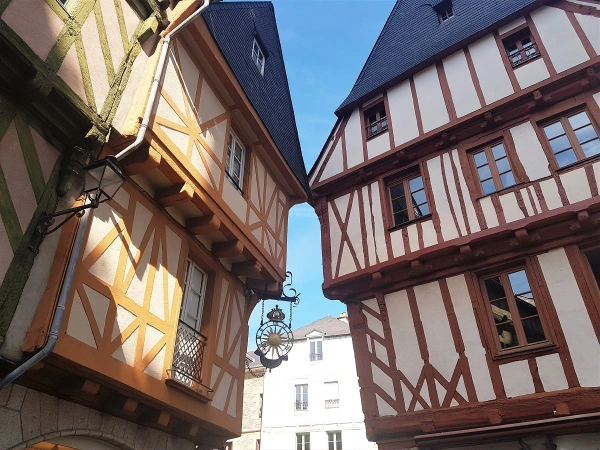
| Place Henri IV | Most-photographed square; 16th-century half-timbered houses | 10 min | Yes, briefly. Gets crowded midday in summer. |
The Cathedral’s Unusual Artifact
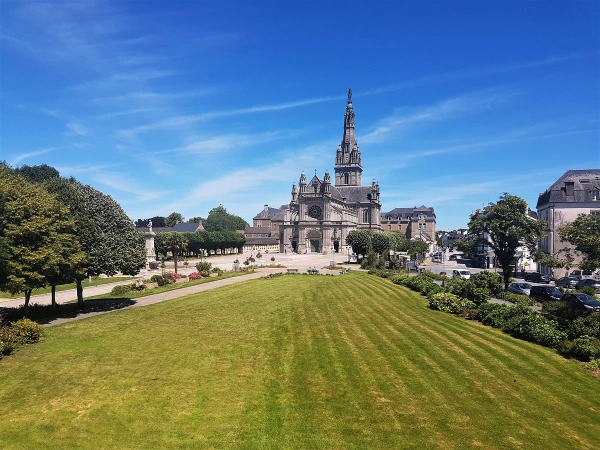
The Cathédrale Saint-Pierre de Vannes is worth more than a quick pass. Construction stretched from the 13th to the 15th century, giving the interior an uneven quality — Romanesque and Gothic elements sitting together without full architectural coherence. The standout object is the 15th-century wooden reliquary said to contain relics of Saint Vincent Ferrer, the Dominican friar who died in Vannes in 1419. It’s one of the more specific and historically grounded artifacts you’ll encounter in a Breton church.
La Cohue — Museum or Skip?
La Cohue was a working market hall from the 13th century until the 19th. The building is the attraction as much as the collection: thick stone walls, exposed timber ceiling, the physical memory of eight centuries of commerce. The museum inside covers Breton fine art from the medieval period through the 19th century, including works by regional painters unlikely to appear in Paris collections. At €6 adult admission, it isn’t expensive. Whether it earns an hour depends entirely on whether fine art is something you seek on travel days or tolerate.
Day Trips That Typically Reward the Effort
Vannes works best as a regional base. These are the excursions that most consistently justify the travel time:
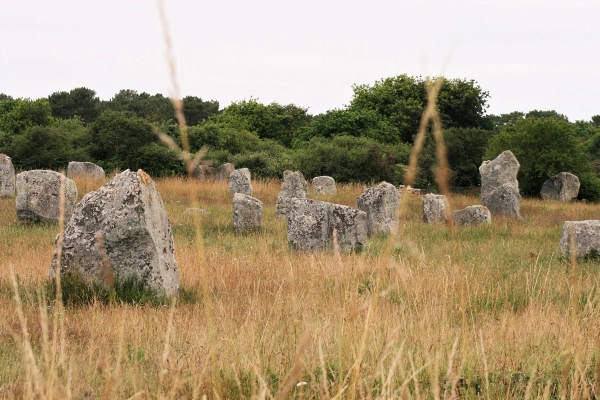
- Carnac (30 km west) — The Carnac megalithic alignments are one of the largest prehistoric stone monument complexes in the world: over 3,000 menhirs arranged in parallel rows across three main sites — Ménec, Kermario, and Kerlescan. Access to the enclosed alignment fields is managed by the Centre des Monuments Nationaux; admission runs roughly €7–9 per adult. You can see stones from public roads for free, but the enclosed sections provide context that roadside viewing doesn’t. Plan for 2–3 hours minimum.
- Locmariaquer (30 km southwest) — Less visited than Carnac and archaeologically as significant. The Grand Menhir Brisé — a collapsed monolith that once stood approximately 20 meters tall and is believed to have been the largest single standing stone ever erected in Europe — sits here alongside the Table des Marchands passage tomb. Combined site entry runs around €6–8. Crowds are noticeably lighter than Carnac.
- Rochefort-en-Terre (35 km northeast) — Officially classified among the Plus Beaux Villages de France, meaning it holds a formal national designation for architectural and landscape quality. Smaller and easier to cover in 2–3 hours than Vannes. The castle gardens and flower-draped stone houses make it one of the more photographed villages in southern Brittany.
- Auray (18 km northwest) — A smaller town with a medieval port quarter (Saint-Goustan) that rivals Vannes in atmosphere at a fraction of the visitor volume. The 15th-century Saint-Gildas church and the stone bridge over the Loch river are the primary draws. Worth a half-day if Vannes’s old town has already been covered.
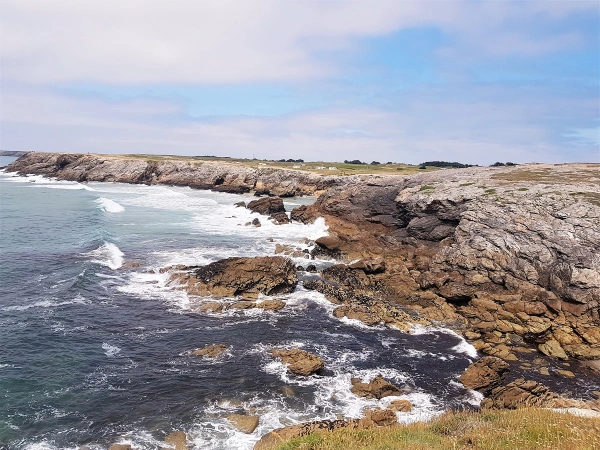
- Quiberon Peninsula (55 km southwest) — For beach access, Quiberon is the practical answer. The Côte Sauvage on the peninsula’s Atlantic side is genuinely dramatic — cliff paths, rough surf, strong winds year-round. The town of Quiberon has ferry connections to Belle-Île-en-Mer, the largest of Brittany’s offshore islands, operated by Compagnie Océane with crossings taking about 45 minutes.
When to Visit Vannes
September is the strongest month, with crowds thinned, temperatures around 18–21°C, and accommodation rates noticeably lower than peak season. Late May to mid-June runs close behind. July and August are warm but crowded near the old town — hotel rates at places like Villa Kerasy and Hôtel Le Roof climb significantly, and last-minute availability narrows fast. The Marché de Vannes runs year-round on Wednesday and Saturday mornings regardless of season, which is one reliable constant when planning around market days.
Getting to Vannes — What Actually Works
Can you reach Vannes by train from Paris?
Yes, and it’s the most practical option for most visitors. TGV trains from Paris Montparnasse reach the Gare de Vannes in approximately 2 hours 15 minutes. As of 2026, standard second-class tickets run €35–90 depending on booking lead time — purchasing 3–4 weeks out typically lands prices in the €40–60 range. The station sits about 15 minutes on foot from the old town. No transfer required.
Is renting a car worth it?
For Vannes city alone, probably not. Parking in the old town area is limited, and walking covers most of what the city offers. For accessing Carnac, Locmariaquer, Quiberon, or the ferry departure points for Gulf islands (which require reaching Baden or other peninsula points by road), a car becomes considerably more useful. Regional bus services — Kicéo within Vannes, BreizhGo for the wider Morbihan department — cover some routes but run infrequently outside peak season and don’t serve all destinations reliably.
What about flying into the region?
Lorient Bretagne Sud Airport sits about 60 km from Vannes and handles limited routes, primarily domestic and a handful of European connections. Nantes Atlantique Airport (115 km) has broader international coverage. For most European visitors, Nantes to Vannes by TGV (approximately 1 hour 15 minutes) is the viable air-then-rail combination. Flying into Rennes is also possible, with train connections to Vannes running around 1 hour 30 minutes.
Where Visitors Typically Go Wrong in Vannes
Spending two full days only inside the walled city is the most reliable way to feel underwhelmed by Vannes. The medieval core is attractive, but it’s compact. You can cover it thoroughly in four to five hours. Travelers who allocate a full two-day visit without incorporating Gulf excursions or regional day trips often report that the second day felt redundant. Vannes functions as a base more than a standalone destination — that distinction matters for itinerary planning.
Other patterns that tend to disappoint:
- Arriving in August without booking accommodation weeks ahead. The city fills faster than its relatively low profile suggests. Last-minute options in peak season typically mean higher prices and lower quality. Hotels near the old town and gulf — Hôtel Le Roof on the Presqu’île de Conleau, Villa Kerasy near the ramparts — book out well in advance for July and August dates.
- Expecting beach access from the city center. Vannes is not a coastal beach resort. The Gulf of Morbihan shoreline is tidal mudflat as often as it is sandy shore. If beach-centric holidays are the goal, Quiberon or La Baule serve that need more honestly.
- Missing the market. The Marché de Vannes runs Wednesday and Saturday mornings on Place de la République and inside the covered Halles de Vannes. It’s where the city operates as a real place rather than a heritage attraction — Breton butter, regional cheese, fresh oysters, local pottery. Worth the early start.
- Ignoring ferry timing. The Gulf of Morbihan’s strong tidal currents mean Navix and Compagnie du Golfe schedules shift with the tides. Some departures only operate at high water. Checking current timetables directly with operators before arrival is the only reliable approach — schedules change seasonally and do not follow a simple repeating pattern.
Vannes vs. Other Brittany Destinations
Choosing between Brittany’s main towns depends almost entirely on what the trip is actually for. Here is where Vannes positions relative to the realistic alternatives:
| City | Best For | Crowd Level | Medieval Old Town | Coastal Access | Best Season |
|---|---|---|---|---|---|
| Vannes | Medieval architecture + Gulf of Morbihan base | Moderate (peaks Aug) | Yes — intact walled city | Indirect (10–15 min to port) | Sept, late May–June |
| Saint-Malo | Dramatic ramparts, beach, Channel Islands ferry | High (very crowded July–Aug) | Yes — heavily restored post-WWII | Direct — beach inside city walls | May–June, Sept |
| Rennes | City culture, food scene, Brittany rail hub | Low–moderate | Partial (half-timbered quarter) | None | Year-round |
| Quimper | Breton cultural identity, faïence pottery, Gothic cathedral | Moderate | Yes | Indirect (Bénodet nearby) | June–Sept |
| Dinan | Best-preserved medieval town in Brittany | Low–moderate | Yes — arguably stronger than Vannes | River (Rance estuary) | May–Sept |
For travelers whose priorities are a genuine medieval atmosphere combined with natural landscape access, Vannes is typically the strongest single combination. Saint-Malo edges it for coastal drama. Dinan edges it for medieval architecture purity — the castle and half-timbered streets there are arguably more intact and less commercialized. Rennes is the practical choice for anyone using Brittany as a multi-city trip with good rail connections in every direction.
What none of those alternatives have is anything comparable to the Gulf of Morbihan. That, more than the ramparts or the cathedral, is what makes Vannes a specific kind of trip rather than an interchangeable Breton town visit.