Are you wondering whether Hoi An lives up to the hype — or about to spend a week somewhere that peaked on Instagram three years ago? Fair question. The answer is complicated, so here’s the unsponsored version.
This is not a sponsored post. No hotels, tour operators, or tourism boards paid for any of the opinions below.
What Hoi An Actually Delivers
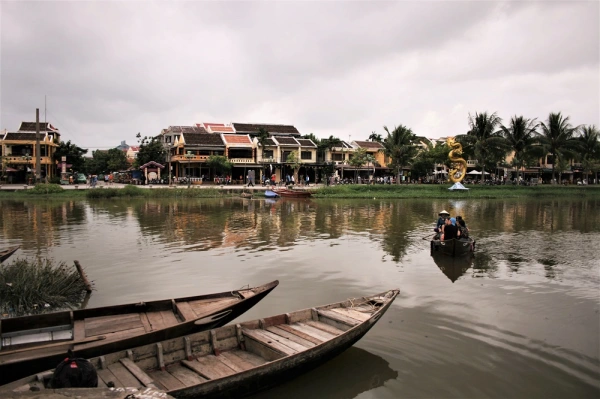
Hoi An is a UNESCO World Heritage Site on Vietnam’s central coast, about 30 kilometers south of Da Nang. The Ancient Town is genuinely preserved 15th–19th century merchant architecture — not a reconstruction, not a theme park. That’s rarer than most travelers expect in Southeast Asia.
The marketing image — lantern-lit streets, quiet canals, empty alleyways — is a selective edit. Real Hoi An has crowds. But it also has some of the best street food in Vietnam, architecture that rewards slow attention, and a local commercial life that still runs alongside the tourism economy rather than being replaced by it.
The Ancient Town Is Real, But So Is the Foot Traffic
On a weekday morning in November, the Ancient Town has more tourists than some major European cities on a summer Saturday. Tour groups arrive by the busload from Da Nang around 9 AM. By 11 AM, Nguyen Thai Hoc Street is shoulder-to-shoulder.
That doesn’t make it not worth visiting. Timing matters more here than at most destinations. Before 8 AM, the streets are walkable and the light is right. Show up at 10 AM and you’ll spend your visit navigating selfie sticks.
The Japanese Covered Bridge (Chùa Cầu), built around 1593, is structurally striking in a way photos don’t capture — the joinery, the weathering, the way it sits between what were historically Japanese and Chinese quarters. Spend time looking at the actual buildings rather than photographing them and you’ll understand why UNESCO wanted it preserved.
The Food Scene Is Legitimately World-Class
Hoi An overdelivers on food. The local specialties — cao lầu (thick wheat noodles with pork and greens), white rose dumplings (bánh vạc), and fried wontons — are specific to this region and genuinely difficult to replicate elsewhere in Vietnam.
Bánh mì Phượng on Phan Châu Trinh Street is worth the wait and the 30,000–40,000 VND (about $1.20–$1.60) price tag. Anthony Bourdain called it the best bánh mì in the world, and the bread-to-filling ratio and freshness of herbs here are noticeably better than the copies that have appeared elsewhere.
White rose dumplings are worth ordering at Bà Buội (White Rose Restaurant) on Hai Ba Trung Street, where the family that holds the regional recipe still operates. Expect 60,000–80,000 VND (about $2.50–$3.50) per plate. The Morning Glory restaurant on Nguyen Thai Hoc Street covers a broader menu of Hoi An classics at mid-range prices (120,000–180,000 VND per main). Slightly touristy in atmosphere, but the food holds up.
The Beach Situation Needs Clarification
Hoi An does not sit on the beach. The nearest usable beach, An Bang, is about 3 kilometers from the Ancient Town — a 15-minute bicycle ride. Cua Dai Beach is closer but has suffered significant erosion over the past decade and is largely inaccessible now.
An Bang is the better choice. Calmer water, fewer vendors, and beachside restaurants serving grilled seafood for 80,000–150,000 VND per dish. Go in the morning — afternoons bring stronger winds and choppier surf.
Bottom Line: Hoi An delivers on food and architecture. It does not deliver on “hidden gem” energy — that ship sailed around 2015. Go with calibrated expectations and you’ll leave satisfied.
Hoi An Budget Breakdown by Travel Style
The numbers below reflect 2026 pricing. USD conversion based on approximately 24,500 VND to $1.
| Expense | Budget | Mid-Range | Splurge |
|---|---|---|---|
| Accommodation (per night) | $12–18 (guesthouse) | $40–80 (boutique hotel) | $150–300 (Anantara, La Siesta) |
| Meals (per day) | $8–12 | $20–35 | $50+ |
| Ancient Town ticket | $5 (120,000 VND) | $5 (120,000 VND) | $5 (120,000 VND) |
| Transport (daily) | $2–4 (bicycle hire) | $8–15 (Grab taxi) | $30+ (private driver) |
| Activities | $0–10 | $20–40 | $60–120 (cooking class, tours) |
| Daily total | $27–49 | $93–175 | $295+ |
Budget travelers staying in guesthouses just outside the Ancient Town (prices inside jump 30–40%) can keep daily costs under $50 comfortably. The ticket at 120,000 VND is a fixed cost regardless of travel style.
Mid-range is where most independent travelers land. Hotels like the Hoi An Historic Hotel or smaller boutique properties on Tran Phu Street run $50–70 and typically include breakfast. Value drops noticeably above $80 — above that price point, you’re paying for a pool and a brand name, not a meaningfully better experience of the town itself.
At the splurge level, the Anantara Hoi An Resort (on the Thu Bon River, from about $200/night) and La Siesta Resort & Spa (from $180/night) are the legitimate premium options. Both deliver on the experience. Generic hotels charging $150+ purely on Hoi An location premium are not worth it.
Bottom Line: Hoi An is genuinely affordable even at mid-range. The food budget is where most travelers underspend — you can eat extremely well for $15–20/day if you eat where locals eat rather than where tourists congregate.
The Best Time to Visit
February through April. Dry season, mild temperatures around 24–28°C, smaller crowds than peak summer. Avoid July and August if you dislike heat and tour groups. October and November bring serious rain — the Ancient Town floods regularly, sometimes knee-deep. That’s the full picture.
Where Tourists Lose Money in Hoi An
Hoi An has a highly developed tourist economy. Predictable patterns of overcharging come with that territory. Here are the six most common ones.
- Tailoring without due diligence. Custom clothing in Hoi An is real, but quality is wildly inconsistent. Shops like Yaly Couture (multiple locations, suits from $100–300) have an established reputation for consistent results. Cheaper shops can work, but request fabric swatches, get photos of the finished garment before pickup, and read reviews specifically from travelers who’ve worn the piece after returning home — not just “looked great when I picked it up.”
- Booking cooking classes through your hotel. The Red Bridge Cooking School charges $35–45 per person including a boat trip to their riverside farm. Morning Glory Cooking School runs $30–40 per person. Book direct. Hotel booking typically adds a 20–30% commission for zero added value.
- Renting a motorbike without understanding the liability. Rental costs $5–8/day. But foreigners riding motorbikes in Vietnam without an International Driving Permit endorsed for Category A2 vehicles are technically uninsured in the event of an accident. Hoi An’s Ancient Town also has restricted traffic hours for motorbikes. A bicycle at $2–3/day handles the town and An Bang Beach without any of that exposure.
- Eating directly on the main tourist streets. Restaurants on Nguyen Thai Hoc and Tran Phu Streets charge a 30–50% foot traffic premium over comparable quality just one block back. Walk off the tourist corridor. The food quality gap is zero. The price gap is real.
- Buying lanterns at the first stall. First prices on the tourist circuit run 80,000–120,000 VND per lantern. Three minutes off the main drag, the same items are 50,000–80,000 VND. Simple math.
- Taking day trips through your hotel desk. My Son Sanctuary entry is 150,000 VND ($6). A GrabCar round trip from Hoi An costs roughly 400,000–500,000 VND. Hotel-organized day trips to the same site run $25–40 per person — a significant markup for no meaningful service improvement. Book independently.
The Ancient Town Ticket: Your Questions Answered
What exactly does the 120,000 VND ticket cover?
It’s a booklet of five coupons. Each coupon admits you to one heritage site, chosen from these categories: Assembly Halls (Fujian Assembly Hall, Cantonese Assembly Hall), Ancient Houses (Tan Ky House, Phung Hung House), the Japanese Covered Bridge, the Museum of History and Culture or Museum of Trade Ceramics, and the Traditional Performing Arts venue. You choose which five you visit — the ticket is not locked to a fixed route.
Can you walk the Ancient Town without buying a ticket?
Yes. Streets, canal-side paths, shops, and restaurants are all accessible without a ticket. The 120,000 VND is only required to enter the ticketed heritage sites themselves. If you’re spending the day eating, shopping, and walking the alleyways, you don’t need it.
Which five sites are worth your coupons?
Use one coupon for the Japanese Covered Bridge — the interior detail is worth seeing up close. Use one for Tan Ky Ancient House (101 Nguyen Thai Hoc Street) — the best-preserved merchant house interior in the town, with Japanese, Chinese, and Vietnamese architectural influences visible in a single building. Use one for the Fujian Assembly Hall on Tran Phu Street — well-maintained with strong visual character. Skip the ceramics museum unless you have specific interest in trade history; the collection is modest by international museum standards. Use remaining coupons based on crowd levels when you arrive — the Cantonese Assembly Hall is typically less congested than the most-photographed sites.
A 3-Day Hoi An Itinerary That Actually Works
Three days is the right amount of time here. Two feels rushed. Four means manufacturing activities that don’t justify the visit.
Day 1: Ancient Town on Your Terms
Before 8 AM, the Ancient Town is walkable. Start at the Japanese Covered Bridge while the light is right and the streets are quiet. Walk east along the canal toward Nguyen Thai Hoc Street. Breakfast at Bánh mì Phượng — it opens around 6:30 AM and already has a short line by 7 AM.
Mid-morning: Tan Ky Ancient House (use a coupon). By 11 AM, crowds have arrived — that’s your signal to leave the Ancient Town, find a local restaurant for cao lầu (try Thanh Cao Lau on Nguyen Hue Street, around 40,000–50,000 VND per bowl), and spend the afternoon at the tailors or in the covered market on Tran Quy Cap Street.
Evening: one sunset walk along the Thu Bon River and one lantern-lit hour in the Ancient Town. The tourist density is high, but the atmosphere is worth experiencing once.
Day 2: Outside the Town
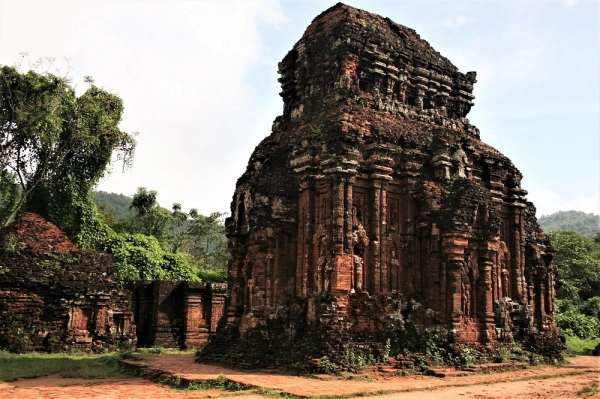
My Son Sanctuary opens at 6 AM. Get there at opening — by 9 AM it’s hot and crowded with tour groups. Entry: 150,000 VND ($6). Private GrabCar round trip from Hoi An: 400,000–500,000 VND. Group tour including entry through operators like Viet Vision Travel: $15–20 per person. My Son is a 4th–14th century Cham Hindu temple complex, partially destroyed by US bombing in 1969, now a UNESCO World Heritage Site. It’s quieter and more historically significant than most visitors expect going in.
Return by midday, spend the afternoon at An Bang Beach. Afternoon beers at beachside restaurants: 25,000–35,000 VND per can.
Day 3: Slow Down Deliberately
Morning cooking class — book Red Bridge Cooking School or Morning Glory Cooking School in advance, not through your hotel. If you ordered tailored clothing on Day 1, this is your pickup day (reputable shops need 48–72 hours for custom pieces; set that timeline when you place the order). Final evening at a riverside restaurant — Mango Rooms on Nguyen Thai Hoc Street runs 200,000–350,000 VND per main, but the river view justifies it as a last-night choice.
Hoi An’s tourist infrastructure is maturing fast — prices have crept up noticeably over the past five years and the crowds show no signs of thinning. The window to experience a genuinely good version of the place is still open. How much longer that remains true is a reasonable thing to factor into when you book.