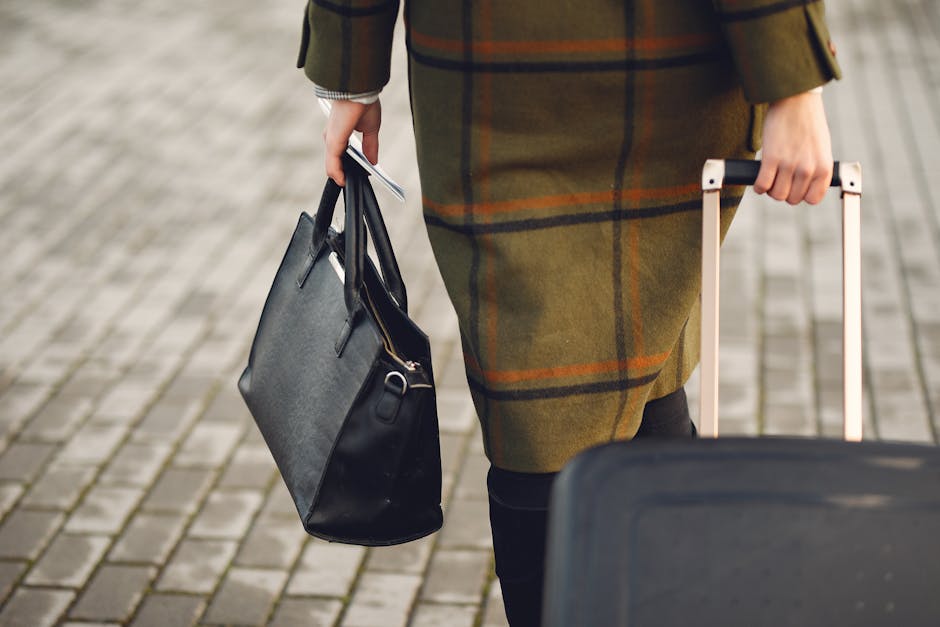
U.S. airlines collected $6.8 billion in checked baggage fees in 2026. That number has pushed more travelers toward carry on-only strategies — but the problem nobody talks about is that many popular carry on bags sold at major retailers exceed at least one major airline’s maximum dimensions. You can buy a bag that flies fine on Southwest but gets gate-checked on American every single time.
This guide names specific bags, gives you exact dimensions, and explains the mechanics behind airline size enforcement so you stop guessing and start packing with confidence.
How Airline Size Rules Actually Work — and Where Travelers Get Caught
Most airline size policies are published in two places: the website and the gate. These are not always the same measurement in practice.
Airlines list maximum carry on dimensions in total linear inches — length plus width plus height. A bag at 22 x 14 x 9 inches totals 45 linear inches, which fits within most major U.S. carrier limits. The catch: some carriers measure with wheels and handles extended, others measure the bag body only. A rolling case that stands 22 inches to the top of the handle may measure 24 inches from the floor with the wheel base included.
Gate agents use a physical sizer — a metal frame bolted to the boarding area floor. If the bag doesn’t drop in cleanly, it doesn’t board. There’s no argument. Here’s the current size landscape for carriers most travelers actually use:
| Airline | Max Dimensions (L x W x H) | Linear Inch Total | Wheels and Handles Included |
|---|---|---|---|
| American Airlines | 22 x 14 x 9 in | 45 in | Yes |
| Delta Air Lines | 22 x 14 x 9 in | 45 in | Yes |
| United Airlines | 22 x 14 x 9 in | 45 in | Yes |
| Southwest Airlines | 24 x 16 x 10 in | 50 in | Yes |
| Spirit Airlines | 22 x 18 x 10 in | 50 in | Yes |
| Ryanair (Europe) | 21.7 x 15.7 x 7.9 in (55 x 40 x 20 cm) | ~45 in | Yes |
| easyJet (Europe) | 22 x 17.7 x 9.8 in (56 x 45 x 25 cm) | ~50 in | Yes |
| British Airways | 22 x 18 x 10 in (56 x 45 x 25 cm) | ~50 in | Yes |
The practical conclusion: buy to American, Delta, and United’s 22 x 14 x 9 limit and the bag works everywhere. Buy to Southwest’s more generous dimensions and you’ve locked yourself into Southwest-only carry on travel.
The Expandable Zipper Trap
Many bags include an expansion zipper adding 1–2 inches of depth. Useful for packing out. Dangerous at the gate. A bag that’s exactly 9 inches deep when closed becomes 10.5 inches expanded — and agents measure bags as they arrive, not as they were packed at home. This single feature is responsible for more gate checks than overpacking ever is.
Hard Shell vs. Soft Shell: Here’s the Clear Answer
Hard shell polycarbonate wins for most travelers, and it isn’t particularly close. Hard cases hold their stated dimensions whether you pack them to capacity or not. Soft bags bulge. Bulge adds measured inches. Measured inches fail the sizer frame. The physics here are straightforward.
The only real exception is regional jet travel. Small aircraft like the CRJ-700 or Embraer E175 have overhead bins too narrow for standard hard-sided carry ons. Flight attendants on these routes routinely ask passengers to gate-check bags that would otherwise pass every size test. For travelers whose primary flights are short regional hops, a compressible soft bag like the Travelpro Platinum Elite 21″ handles that flexibility better than any hard case.
For everything else — transatlantic flights, domestic trunk routes, international connections — go hard shell and stop thinking about it.
The 8 Best Carry On Bags: Exact Specs, Real Prices
These are ordered by use case, not price or prestige.
Best Overall: Away The Carry-On ($295)
Dimensions: 21.7 x 13.7 x 9 inches. Weight: 7.8 lbs. Polycarbonate shell with a built-in TSA-approved combination lock on the zipper. The interior compression system — a cross strap that tightens against the top of your clothes — actually works, unlike the loose straps most bags include. Four 360-degree spinner wheels. Fits American, Delta, and United with room to spare. Skip the battery-included model; TSA enforcement on lithium batteries in luggage has tightened, and the non-battery version is identical in every other way.
Best Budget Option: Samsonite Omni PC 20″ ($130–$160)
Dimensions: 20 x 14.5 x 9.5 inches. Weight: 6.7 lbs. The micro-diamond texture on the shell resists surface scratches and hides the scuffs that accumulate after a few trips through European rail stations and airport carousels. It’s not as smooth-rolling as Away or Rimowa. The spinner wheels are slightly noisier on hard airport floors. At $130, it’s a legitimate workhorse for travelers who take two or three trips a year and don’t want to spend carry on money on checked bag pricing.
Best Premium Pick: Rimowa Essential Cabin ($700+)
Dimensions: 21.7 x 15.8 x 9.1 inches. Weight: 7.7 lbs. The Essential is Rimowa’s polycarbonate line — lighter and more affordable than the aluminum Original Cabin, which starts above $1,050. The multi-wheel system rolls noticeably smoother than any bag in a lower price tier; on long terminal walks at Heathrow Terminal 5 or Dubai International, that difference is felt. Rimowa offers a lifetime guarantee against manufacturing defects. For travelers flying weekly, the durability and resale value justify the cost. For anyone flying fewer than six times a year, the price premium over Away doesn’t translate to a proportionate experience improvement.
Best Soft-Sided Rolling Bag: Travelpro Platinum Elite 21″ Rollaboard ($350)
Dimensions: 21 x 14 x 9 inches. Weight: 7.1 lbs. This is the bag airline crews use. Travelpro supplies crew luggage to multiple U.S. carriers, which means the wheel assemblies and telescoping handles are designed for daily professional use, not occasional leisure travel. The MagnaTrac spinner system locks the wheels forward for straight-line rolling — a small feature that matters enormously in crowded airport corridors. Soft construction allows slight compression on regional jets with narrow overhead bins.
Best Lifetime Warranty: Briggs and Riley Baseline 22″ ($699)
Dimensions: 22 x 14 x 9 inches. Weight: 7.5 lbs. Briggs and Riley offers the only unconditional lifetime guarantee in the carry on category that explicitly covers airline damage — not just manufacturing defects. If baggage handlers damage your bag on the jetway, they repair it free. The CX expansion-compression system is the only expandable mechanism that compresses the bag back to original dimensions before boarding, solving the expansion zipper problem described above. It’s the one case where buying an expandable bag doesn’t threaten your size compliance.
Best Carry On Backpack for Budget Travel: Osprey Farpoint 40 ($160)
Capacity: 40 liters. Dimensions: 22 x 14 x 9 inches. Weight: 3.1 lbs. The Farpoint 40 packs more usable volume than any rolling case its size because there’s no wheel housing eating into the interior. It’s a panel-loader — it opens flat like a suitcase, which makes packing and finding items manageable in a way top-loading backpacks aren’t. The hip belt and shoulder harness stow behind a zippered panel during flights so the bag handles as a piece of soft luggage, not a hiking pack that triggers airline handling concerns.
Best for Tech and Creative Travelers: Peak Design Travel Backpack 45L ($350)
Capacity: 45 liters when fully expanded, compresses to 35L. Dimensions when compressed: 22 x 14.2 x 8.7 inches. Weight: 5.2 lbs. Multiple external access points mean you’re not unpacking to find a camera battery or a charging cable. The dedicated laptop sleeve fits a 16-inch MacBook Pro without the bag looking like a tech carry. At $350, it’s expensive for a backpack. Justified if you travel with camera gear, drones, or electronics inventory worth protecting in the cabin rather than checking.
Best for European Budget Airlines: Monos Carry-On Plus ($245)
Dimensions: 21.7 x 15.4 x 9.5 inches. Weight: 7.7 lbs. At 9.5 inches deep, the Monos Carry-On Plus technically exceeds American Airlines’ 9-inch depth limit. In practice, most gate agents don’t catch the half-inch difference. But if you’re a frequent American or Delta flyer, buy the standard Monos Carry-On ($220, 8.5 inches deep) instead. The Plus was designed around easyJet and British Airways’ more generous width and depth allowances, making it the right tool for European travel and the wrong tool for U.S. mainline carriers.
The Packing Habits That Make the Bag Matter Less
The bag is half the equation at best.
Compression packing cubes reduce clothing volume by roughly 35–40%. Eagle Creek Pack-It Compressors run $25–$45 per set and let you fit a week of clothing into a space that would otherwise hold four days. That compression is the difference between a 7-day trip that carries on and one that doesn’t — regardless of which bag you own.
The other habit experienced travelers develop is brutal curation before packing. Lay everything out. Put half back. Most people overpack by 40–60% relative to what they actually wear on a trip. Buying a bigger bag to accommodate overpacking is solving the wrong problem and creating a new one at the gate.
Rolling clothes rather than folding them reduces wrinkles and saves space. Shoes go in the corners of a hard case, soles facing the shell, to protect clothing in the center. None of this is complicated. It’s just practiced.
What Actually Gets Bags Gate-Checked: Three Specific Failure Modes
Overstuffing a Bag Already at Its Limit
A soft-sided bag advertised as 21 x 14 x 9 inches is measured at those dimensions empty. Pack it until the zipper strains and the side depth becomes 11 inches. The physical sizer frame at the gate doesn’t negotiate. Hard shells eliminate this failure mode entirely by physically preventing overstuffing past their molded dimensions.
Buying a Bag Sized for One Airline’s Rules
Some bags are marketed as carry on compliant when they were sized for Southwest’s 24 x 16 x 10 limit — not American’s 22 x 14 x 9. A bag that clears Southwest boarding without question will be gate-checked on American on the same trip. Always benchmark against the strictest carrier you’ll realistically use, which for most North American travelers means the 45 linear inch standard.
Boarding in the Last Group
This one has nothing to do with bag size. When overhead bins fill, gate agents pre-tag bags at the door before passengers even reach the jetway. Boarding in the first two groups — by seat position, paid priority, or airline status — reduces gate check exposure more reliably than any bag purchase. The bag is fine. The boarding time is the variable.
When a Backpack Beats a Rolling Suitcase
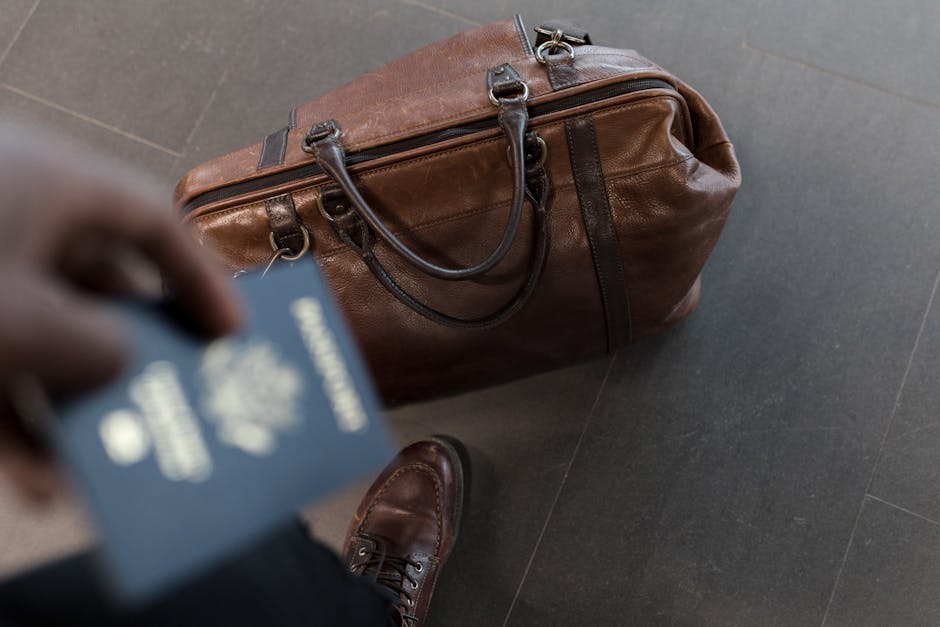
Rolling suitcases are the default carry on format. They are not always the right answer.
Backpacks outperform rolling cases in three distinct travel contexts. First: destinations with significant walking between transport connections — cobblestoned city centers in Italy or Portugal, markets and neighborhoods in Southeast Asia, accommodation that requires navigating stairs and narrow alleyways where a rolling suitcase becomes a liability. Second: budget airline routes in Europe where the personal item allowance (under-seat bag) is free while the carry on overhead bin space carries an additional fee — a 35-liter backpack often qualifies as a personal item on easyJet and Wizz Air, making it effectively free to fly. Third: multi-destination itineraries where you’re repacking and moving frequently enough that a bag you can carry on your back for 20 minutes is meaningfully easier than dragging a case across uneven terrain.
Rolling cases win on any route involving smooth airport floors, hotel pick-up, and minimal walking between transport modes. That describes most business travel and most resort-based holidays. The spinner wheel advantage on polished terminal floors is real and significant over any distance above 400 meters.
The Osprey Farpoint 40 at 3.1 lbs is also dramatically lighter than any rolling case at comparable capacity — roughly half the weight of the Away Carry-On. That weight difference matters on routes where you’re paying per kilogram.
Budget, Mid-Range, and Premium: Where the Real Value Lives
The mid-range tier wins on value for the majority of travelers. The premium tier is justified for specific use cases. The budget tier has one weakness that compounds over time.
| Tier | Price Range | Best Pick | Who It’s Right For | Honest Weakness |
|---|---|---|---|---|
| Budget | $80–$160 | Samsonite Omni PC 20″ | Occasional travelers, 1–3 trips per year | Spinner wheels degrade noticeably after 2–3 years of regular use |
| Mid-Range | $200–$350 | Away The Carry-On or Travelpro Platinum Elite | Most travelers, 3–12 trips per year | Away’s warranty requires registration and has coverage limits |
| Premium | $500–$1,050+ | Rimowa Essential Cabin or Briggs and Riley Baseline | Weekly business travelers, long-term ownership focus | Price premium does not translate linearly to experience improvement |
| Backpack | $160–$350 | Osprey Farpoint 40 or Peak Design 45L | Adventure travel, multi-city Europe, budget airlines | Wrong format for airport-to-hotel business travel |
The $700 Rimowa Essential Cabin is not three times better than the $295 Away Carry-On. It rolls more smoothly on long terminal walks, it looks more impressive in a business context, and it holds resale value longer than any polycarbonate competitor. Those differences are real. They justify the price for travelers who fly four or more times per month. For anyone below that frequency, the Away does the same job at less than half the cost.
The budget tier’s genuine weakness is wheels. The distance between an $80 spinner and a $295 spinner isn’t visible when the bags are new — it becomes apparent after 15 trips through Chicago O’Hare, Heathrow, or Changi Airport. Budget wheels wobble, catch on textured flooring, and eventually seize. Premium spinner systems like Rimowa’s Multi-Wheel or Travelpro’s MagnaTrac still roll straight and quiet after years of that punishment.
The traveler who started looking for the best carry on luggage — trying to figure out whether their current bag is actually airline-compliant, or whether an upcoming trip requires an upgrade — almost certainly belongs in the mid-range tier. Buy the Away Carry-On for hard-shell reliability and a clean interior compression system. Buy the Travelpro Platinum Elite for soft-sided flexibility and airline-grade wheel construction. Either clears every gate check sizer you’ll encounter, and at $295 or $350, the cost per trip drops below the price of a checked bag fee within the first year of regular use.