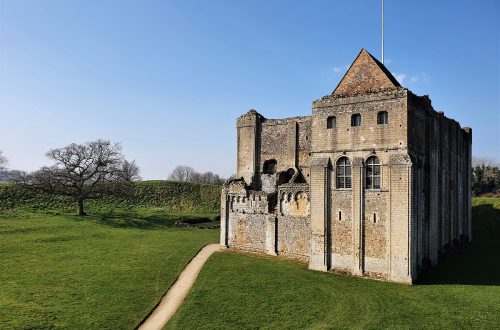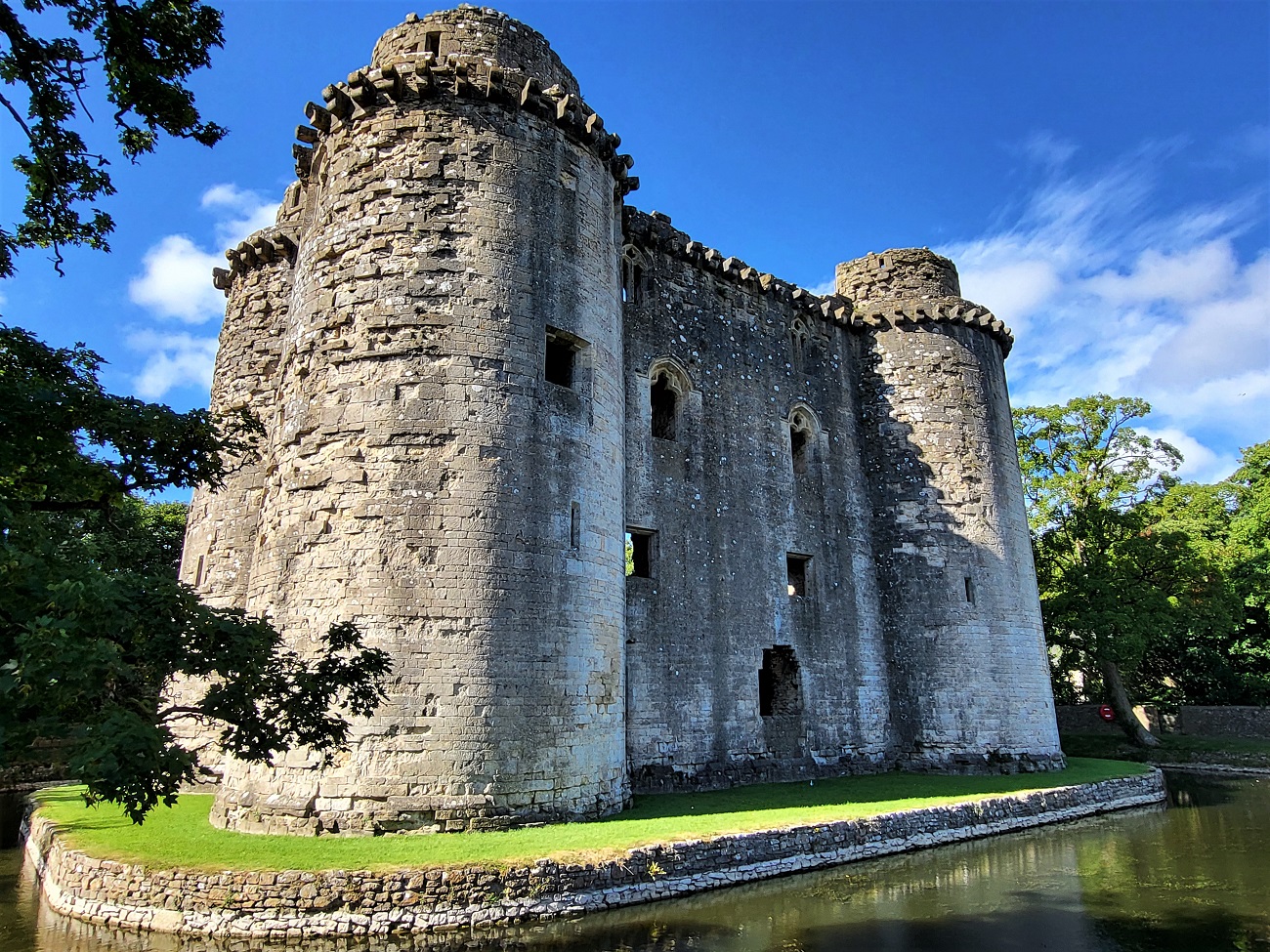
I’ve visited over 40 castles in the UK, and Nunney Castle is the one that stops me mid-stride every time. It’s not the biggest. Not the most famous. But for my money, it’s the most photogenic ruin in England — a perfect miniature fortress dropped into a Somerset village like someone forgot to pick it up after a medieval photoshoot.
Built in the 1370s by Sir John Delamare, a knight who fought in the Hundred Years’ War, this castle was designed to impress. Four round towers, a deep moat, and walls that still punch above their weight after 650 years. English Heritage manages it now, and entry is free. No gift shop. No cafe. Just you, the jackdaws, and a structure that feels more like a story than a building.
Why Nunney Castle Works (and Where Other Ruins Fail)
Most castle ruins in England are shells — a wall here, a staircase to nowhere there. Nunney is different. It’s almost complete in its outline. You walk across the wooden bridge over the moat, step through the gate, and you’re inside a space that still feels like a room. The four round towers rise intact, the fireplaces are visible in the walls, and you can see exactly where the great hall would have been.
The moat is the secret weapon. Most ruined castles have dry ditches. Nunney’s is still full of water, fed by a local stream. It reflects the towers, doubles the visual impact, and keeps the site feeling isolated even though houses sit fifty meters away.
What doesn’t work? The lack of interpretation. There’s one small information panel near the entrance. If you want the full story, you need to read up beforehand or listen to the English Heritage audio guide (free on their app). I’ve seen families show up, walk around for four minutes, and leave. That’s a missed opportunity.
What You’ll Actually See: A Walk Through the Castle
The Exterior and Moat
Approach from the car park (free, on Castle Lane). The path curves around the moat. Best light is early morning or late afternoon — the golden hour turns the local stone a warm ochre. The moat is about 15 meters wide at its broadest point. Don’t feed the ducks; there’s a sign asking visitors not to. The water is shallow in summer, deeper in winter after rain.
The Gatehouse and Inner Courtyard
The wooden bridge is a modern replacement, but it follows the original line. The gatehouse arch is narrow — deliberately so, to force attackers into a single file. Inside, the courtyard is a rectangle roughly 20 by 15 meters. Grass, some gravel, a bench. That’s it. The bareness is part of the charm. You’re not looking at a curated exhibit; you’re standing in a space that was lived in.
The Tower Interiors
You can’t climb the towers — the spiral staircases are blocked off for safety. But you can peer into each one from the courtyard. The northeast tower shows the best surviving fireplace, a massive stone hood about 2 meters high. The southeast tower has a garderobe (medieval toilet) chute visible from the outside — a detail most visitors miss. Look for the small rectangular slot at ground level on the outer wall.
The Great Hall Remains
On the first floor level, you can see the outline of the great hall windows. Three tall arched openings, now empty. Stand underneath them and look up — the stonework is crisp, almost sharp. It’s the best spot for a photo that makes people ask “where is that?”
How to Visit Without Wasting Your Time
Nunney Castle is not a day trip destination. It’s a stop. Here’s how to make it work.
Pair it with something nearby. My standard route: start at Nunney Castle (45 minutes to an hour), then drive 15 minutes to Longleat Safari Park or 20 minutes to the city of Wells (cathedral, Bishop’s Palace, market square). Alternatively, head east to Frome (10 minutes) for lunch at one of the independent cafes — The High Pavement does a good flat white and a bacon bap for £7.
Timing matters. The castle is open dawn to dusk, 365 days a year. No gates, no locked doors. I’ve been there at 7am with frost on the grass and at sunset in July. Both are excellent. Avoid weekends in summer if you want solitude — it’s popular with photographers and families. Tuesday morning in March is my pick.
What to bring: sturdy shoes (the ground gets muddy after rain), a camera with a wide-angle lens (you’ll want to capture the full height of the towers), and a printed or downloaded guide from the English Heritage website. There’s no phone signal in the village? Actually, there is — I’ve had 4G on Three and Vodafone both times. But bring a backup anyway.
What not to do: don’t climb the walls. They look solid, but the stone is loose in places. English Heritage doesn’t police the site, but I’ve seen a parent lift a child onto a windowsill and watched a chunk of mortar fall. Not worth it. Also, don’t expect toilets or refreshments. The nearest public toilets are in the village car park (50p, coin only) or at the George Inn pub across the road.
| Item | Details |
|---|---|
| Entry cost | Free (English Heritage, no ticket required) |
| Opening hours | Dawn to dusk, every day |
| Parking | Free, Castle Lane car park (20 spaces) |
| Nearest postcode | BA11 4LU |
| Toilets | Village car park (50p) or George Inn pub |
| Best time to visit | Early morning or late afternoon, weekdays |
| Mobile coverage | Good (all major networks) |
The One Mistake Most Visitors Make
They treat it as a drive-by. Pull up, take three photos from the bridge, leave. I’ve done it myself on a first visit, and I regretted it.
The mistake is not walking the perimeter. The castle looks completely different from every angle. The north side, facing the village green, shows the moat at its widest. The south side, backing onto gardens, gives you a view of the towers in silhouette against the sky. The east side, from the footpath that runs alongside the stream, lets you see the original water management system — a sluice gate that controlled the moat level.
Walk the full loop. It takes ten minutes. You’ll see details you missed: the arrow slits on the west tower, the remains of a stone bridge abutment on the north side, the way the light changes as you move. Don’t just look at the castle. Walk around it.
Another mistake: visiting without reading anything about the Civil War damage. In 1645, Parliamentarian forces besieged the castle. They didn’t storm it — they just pounded the north wall with cannon fire until the Royalist garrison surrendered. The damage is still visible. Look for the repaired section of the north wall, where the stone is a slightly different colour. That’s the 17th-century patch job. It tells you more about the castle than any guidebook paragraph.
Alternatives: When Nunney Isn’t the Right Choice
I love Nunney, but it’s not for everyone. Here’s when you should pick something else.
If you want a full day out with cafes and shops: skip Nunney and go to St. Michael’s Mount in Cornwall or Warwick Castle. Nunney is a 45-minute stop, not a destination. Don’t drive two hours expecting a half-day experience.
If you need wheelchair access: the site has a wooden bridge over the moat and a gravel path into the courtyard, but the interior is uneven grass. A manual wheelchair can manage the courtyard with help. Power chairs might struggle on the gravel. The best accessible castle in Somerset is Dunster Castle (National Trust), which has a dedicated accessible route and adapted toilets.
If you’re bringing young children who need entertainment: Nunney has no play area, no interactive exhibits, and no space to run safely (the moat is unfenced). Kids who love climbing will be frustrated by the blocked towers. Take them to Farleigh Hungerford Castle instead — it’s 20 minutes east, has more open space, and the ruins are lower to the ground so kids can explore without the drop risk.
If you want a “complete” castle experience with rooms and roofs: Nunney is a shell. For that, go to Berkeley Castle in Gloucestershire (45 minutes north) — lived-in, furnished, with a dungeon and a garden. It costs £12 for adults, but you get the full medieval package.
Why Nunney Sticks With Me
I’ve been back four times. Each visit, I find something new. Last time it was the moss growing on the north wall — a patch of deep green that only appears after a wet week. The time before, it was a kestrel perched on the southeast tower, scanning the field beyond the moat.
Nunney doesn’t try to sell you anything. It’s just there, quiet and patient, waiting for people who want to look properly. In an era where every attraction has a gift shop and a photo op, that restraint feels radical.
The best castles aren’t the ones with the most rooms or the biggest cannons. They’re the ones that make you feel like you’ve stepped into someone else’s story. Nunney does that without saying a word.
I’ll keep going back. And I suspect, once you’ve stood in that courtyard with the towers rising around you, you’ll understand why.