In March 1965, the first U.S. combat troops to enter Vietnam waded onto a beach that American soldiers would later call China Beach. That beach is now called My Khe, it sits inside a modern Vietnamese city of 1.2 million people, and five-star resorts line the same sand where helicopters once landed. Sixty years of reconstruction produced a city that most international travelers still treat as a layover point for Hoi An — which is, in most cases, a significant planning error.
This is not professional travel advice — verify current entry requirements, visa conditions, and local travel advisories through official Vietnamese government sources before making any travel decisions.
What Separates Danang from Vietnam’s Overrun Tourist Circuits
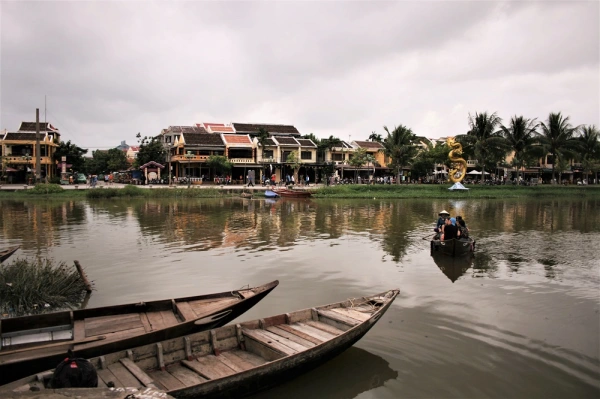
The standard Vietnam itinerary runs through Hanoi, Ha Long Bay, Hue, Hoi An, and Ho Chi Minh City. Danang typically appears in that sequence as the airport — the place you land before heading 30 kilometers down Highway 1 to Hoi An’s lantern-lit streets. That positioning has created a persistent underestimation of the city itself.
Danang is a working urban center. Markets serve local residents. Traffic patterns reflect commutes, not tourist schedules. The city has approximately 60 kilometers of coastline, a functional modern infrastructure, and a food tradition genuinely distinct from both northern and southern Vietnamese cooking. Unlike Hoi An, which has substantially converted its ancient town to tourism infrastructure, Danang maintains parallel economies — one oriented toward visitors, one entirely indifferent to them.
Travelers have generally found that three to four days allows meaningful engagement with the city. Fewer than two days compresses the experience to beach time and a single cable car ride. More than five days, and the primary sites are typically exhausted unless you’re using Danang as a base for day trips to Hue (90 kilometers north) or the Hai Van Pass mountain road.
The Son Tra Peninsula: Practical Details
About 10 kilometers from the city center, the Son Tra Peninsula rises to 696 meters. The road to the summit — locally called Monkey Mountain — takes roughly 45 minutes by scooter. At the top, the Linh Ung Pagoda houses a 67-meter Lady Buddha statue visible from most of the city. Entry is free. The observation points cover the full coastline from the Marble Mountains to Hai Van Pass.
Red-shanked douc langurs — a critically endangered primate — live in the peninsula’s forest. Mornings before 8am near the road offer the most consistent sighting opportunities, though no sighting is guaranteed. These are wild animals in intact habitat, not a managed viewing experience.
Hai Van Pass: Transportation Options
The Hai Van Pass sits 30 kilometers north of Danang. A rental scooter at 120,000–150,000 VND per day allows independent riding, with the full round trip taking around 90 minutes. The Grab Bike app offers motorbike taxis at approximately 200,000–300,000 VND one-way. The road involves tight mountain switchbacks at elevation; riders unfamiliar with mountain conditions have generally opted for hired drivers. The views looking down over Da Nang Bay and Lang Co Lagoon are the primary draw — clouds permitting.
Danang by Month: Climate Assessment with No Optimistic Spin
Central Vietnam’s climate follows a different cycle from the south, and it catches more travelers off-guard than nearly any other planning variable in the country.
| Period | Avg Temp (°C) | Rainfall Level | Sea Conditions | Assessment |
|---|---|---|---|---|
| January–February | 22–25 | Low–moderate | Choppy, overcast periods | Manageable; cooler and occasionally grey |
| March–May | 26–30 | Low | Calm, clear | Optimal window for most visitors |
| June–August | 32–35 | Low to moderate | Warm, mostly flat | Hot; works well for beach-focused trips |
| September–October | 26–29 | Very high | Rough, swimming unsafe | Typhoon risk — typically not advisable |
| November–December | 23–27 | High | Variable | Rain likely; indoor and cultural activities remain viable |
September and October carry documented typhoon risk. In October 2017, Typhoon Damrey caused widespread flooding throughout the Da Nang and Hoi An region, disrupting travel and causing structural damage across properties. Travelers who booked during typhoon season without cancellation protection have generally reported limited recourse. Any insurance policy covering weather disruption in this region warrants careful review of the exclusion clauses before purchase — coverage terms vary significantly between providers.
March through May represents the most consistent window. Rainfall is low, temperatures are warm rather than oppressive, and sea conditions are reliably calm. June and July peak around 35°C — workable near the coast with early morning scheduling, but genuinely uncomfortable for extended city walking in midday heat.
The Food Scene Is the Real Reason to Go
Everything else in Danang is optional. The food is not.
Central Vietnamese cooking is a separate regional tradition. It’s not the pho-dominant cuisine of Hanoi, and it’s not the sweeter, coconut-influenced cooking of the south. Danang sits at the geographic center of this tradition and produces dishes that are, in most cases, hard to find well-executed outside the region.
Mi Quang is the defining example. Wide, turmeric-yellow rice noodles, a small amount of concentrated broth served intentionally dry rather than as a soup, shrimp, pork, quail eggs, roasted peanuts, and fresh herbs — finished with a rice cracker on the side. At a local stall, a bowl costs 30,000–50,000 VND (roughly $1.20–$2.00 USD). Mi Quang Ba Mua on Tran Binh Trong Street operates without an English menu, on plastic stools, and typically has a queue forming by 7:30am. That queue is the reliable quality signal.
Bun cha ca — rice noodles with fish cake in a clear, lightly seasoned broth — appears throughout the city from early morning. Stall pricing runs 25,000–40,000 VND. Con Market (Cho Con) on Ong Ich Kiem Street concentrates the best density of local food stalls, operating from around 6am and drawing almost no tourist foot traffic by the standards of most Vietnamese markets.
Where Visitors Consistently Overpay
Restaurants directly on My Khe Beach charge a premium that isn’t reflected in food quality. A grilled seafood plate priced at 150,000 VND on the waterfront typically costs 80,000 VND one block inland — same fish, same preparation, different view. The inland version is usually fresher because stall turnover is higher with local customers. Han Market (Cho Han) near the Han River offers better pricing and broader variety than the beachfront strip, and it’s worth navigating even without a Vietnamese-speaking companion.
Ba Na Hills: One Verdict
Ba Na Hills is a theme park built by Sun Group at 1,487 meters elevation, accessed by a cable car that set a world record for length when it opened. The Golden Bridge — a pedestrian walkway held up by two massive stone hands — became a viral photograph in 2018 and now drives the majority of visitor interest.
Adult full-day tickets run 750,000–850,000 VND (approximately $30–34 USD). Peak-season cable car queues exceed two hours. Go if you want an amusement park with mountain scenery and French colonial architecture. Skip it if cultural depth or time efficiency matters to your trip — the investment is considerable relative to what it delivers for non-theme-park travelers. Families with young children are the consistent exception; the rides and structured environment consistently score well with that group.
The Planning Mistakes That Actually Cost People Time
These patterns appear consistently in post-trip accounts. They’re not obscure edge cases — they’re decisions that seemed reasonable at the booking stage and caused real friction on the ground.
Treating Danang as Walkable
It isn’t. My Khe Beach, the Marble Mountains, the Han River district, Son Tra Peninsula, and Dragon Bridge span more than 15 kilometers of city geography. Travelers who arrive without arranged transport — a scooter rental, Grab app access, or a pre-negotiated day driver — typically spend 40–60% of their daily budget on ad-hoc taxis and lose 90 minutes or more to logistics.
Scooter rentals run 120,000–180,000 VND per day and require, in theory, an international driving permit. Enforcement at rental shops is inconsistent. Travelers who rent without documentation accept a specific coverage gap — most travel insurance policies exclude accidents on unlicensed vehicles. That exclusion is worth locating in any policy language before making this decision, as the liability consequences can be substantial.
Booking Accommodation Without Checking Zone Tradeoffs
My Khe Beach and the city center sit roughly 3 kilometers apart — close enough to seem negligible, consequential enough to matter daily. Beachside hotels like the Fusion Maia Danang (all-inclusive, approximately $250–400/night) and the Pullman Danang Beach Resort offer direct sand access but require transit for every non-beach activity. The An Thuong Street area offers guesthouses at 250,000–500,000 VND/night with walking access to mid-range restaurants and the river. Neither zone is the wrong choice — selecting one without awareness of the tradeoff is.
Arriving at Marble Mountains After 9:30am
The Marble Mountains — five limestone and marble hills about 9 kilometers south of the city — open at 7am. Entry costs 40,000 VND, with an optional elevator at 15,000 VND each way. Tour buses begin arriving around 9:30am. The caves inside the hills, particularly Huyen Khong Cave with its Buddhist altars and steep unlit passages, become significantly more crowded and harder to navigate after that point. Arriving at 7am and finishing by 9:30am is the standard recommendation. It’s accurate.
A 3-Day Structure That Holds Up in Practice
The framework below reflects realistic site distances, standard opening hours, and typical transit times. It assumes scooter or Grab access and a tolerance for early mornings — which are, in most cases, when Danang is at its best anyway.
| Day | Morning (7:00–12:00) | Afternoon (12:00–18:00) | Evening (18:00–22:00) |
|---|---|---|---|
| 1 | Marble Mountains — arrive 7am, exit before 9:30am | My Khe Beach; lunch one block from the waterfront | Dragon Bridge fire show (Sat/Sun 9pm); Han River walk |
| 2 | Son Tra Peninsula — early start for langur sighting; Linh Ung Pagoda | Con Market for lunch; Han Market browse | An Thuong Street; Mi Quang Ba Mua or similar local spot |
| 3 | Day trip to Hoi An (30km, ~45 min by car or scooter) | Hoi An Ancient Town; lunch at Ba Le Well or White Rose Restaurant | Return to Danang; final meal at a local bun cha ca stall |
Travelers who substitute Hoi An on Day 3 with Ba Na Hills have generally reported lower overall satisfaction — Hoi An offers cultural depth that a theme park doesn’t replicate for adult travelers. Families with children consistently rank the reversal higher, where Ba Na Hills’ structured rides and controlled environment produce more memorable experiences for younger visitors.
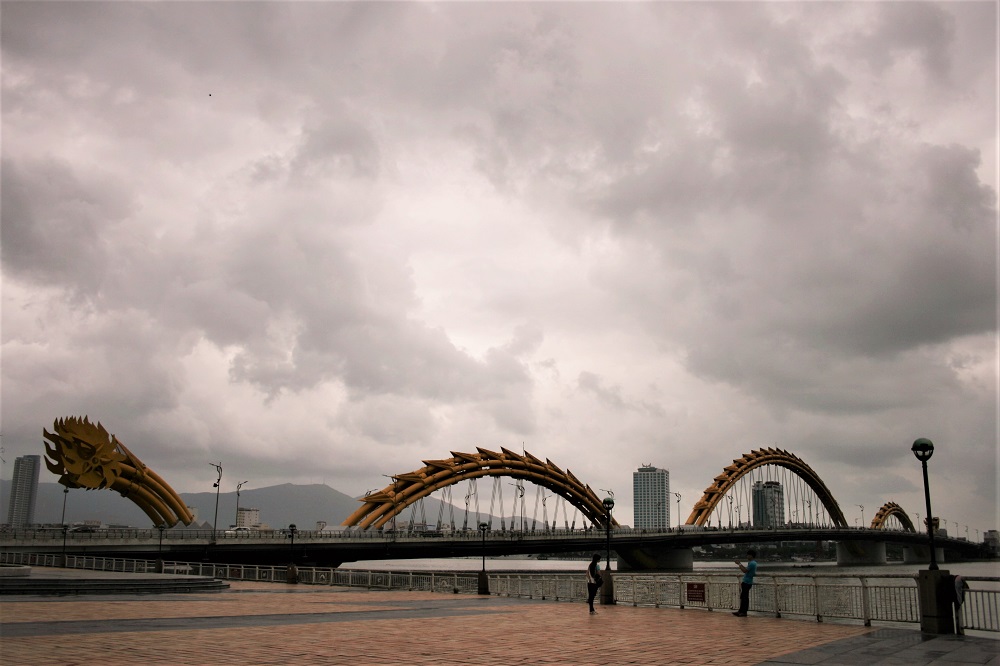
The Dragon Bridge — a 666-meter steel dragon spanning the Han River — breathes fire and water on Saturday and Sunday nights at 9pm. Watching from the riverbank is free. Missing the weekend show means waiting until the following Saturday, so arrival timing matters if this is on the list.
The beach where American soldiers waded ashore in 1965 is now where families rent umbrellas and order fresh coconuts from carts. The city that rebuilt itself around that coastline across six decades is not a layover. Most travelers who give Danang three deliberate days come away wishing they had built the itinerary around it — rather than simply through it.