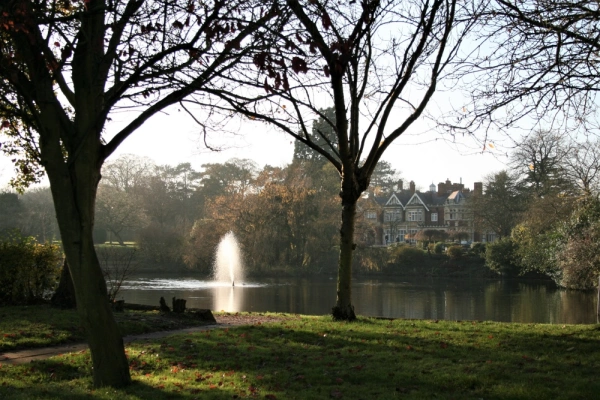
You have a week in England. You want history that doesn’t feel like homework — something that leaves you talking at dinner rather than skimming placards in polite silence. Bletchley Park keeps appearing on every serious shortlist, and the reputation is enormous. But the admission price gives you pause, and a reasonable question follows: is this engaging for a general visitor, or does it only reward people who already know the Enigma story?
The honest breakdown, after examining exactly what you get per pound: Bletchley Park delivers more value than most UK paid attractions in its price bracket — but two specific planning mistakes undermine the experience for a significant share of first-time visitors. Both are avoidable with twenty minutes of research. This guide provides that research.
What the Bletchley Park Ticket Covers — and Its Critical Exclusion
Standard adult admission to Bletchley Park runs £23.50 as of 2026. That covers the full main site: the Mansion, the restored huts (including Hut 6 and Alan Turing’s Hut 8), the visitor centre in Block B, the indoor Bombe machine exhibit, and the landscaped grounds. An audio guide is bundled with every ticket — and unlike most museum audio guides, this one is narrated using recorded accounts from actual former staff and veterans.
What it does not cover: the National Museum of Computing (TNMOC). This is the single most common complaint from first-time visitors who didn’t know in advance. TNMOC operates as a completely separate charity on the same grounds and charges an additional £15 per adult. It houses a rebuilt Colossus — the world’s first programmable electronic computer, built to crack the Lorenz cipher — and a working Bombe demonstration. Budget for both sites or accept the visit will feel incomplete.
| What’s Included in Main Ticket | What’s NOT Included | Additional Cost |
|---|---|---|
| Mansion and formal gardens | National Museum of Computing (TNMOC) | £15 adult |
| Hut 6 and Hut 8 (Turing’s office) | On-site parking | ~£5 |
| Block B exhibitions | Food and drink | Café prices vary |
| Audio guide (bundled) | Guided tours (advance booking) | £10–15 per person |
| Indoor Bombe machine replica | Special seasonal exhibitions | Varies |
Children under 12 enter free. Concessions run approximately £20. Annual memberships cost around £49 — reasonable if you live within driving distance, but poor value for a one-time international visit.
Ticket Comparison: Bletchley Park vs. Other UK WWII Attractions
| Attraction | Adult Price (2026) | Time Needed | Interactivity | Specialist vs. General |
|---|---|---|---|---|
| Bletchley Park (+ TNMOC) | £23.50 + £15 | 4–6 hours | High | Specialist (codebreaking) |
| Churchill War Rooms, London | £28.00 | 2–3 hours | Medium-High | Specialist (Churchill/command) |
| Imperial War Museum, London | Free | 2–4 hours | Medium | General (all theatres) |
| RAF Museum Cosford | Free | 3–5 hours | Medium | General (aviation) |
| The D-Day Story, Portsmouth | £19.50 | 2–3 hours | Medium | Specialist (Normandy) |
| Tank Museum, Bovington | £22.50 | 3–5 hours | Medium-High | Specialist (armour) |
The Audio Guide: A Genuine Asset, Not Filler
Use it. The Bletchley Park audio guide includes recorded accounts from people who actually worked at Station X during the war — not actors, not corporate narration. At several stops in Hut 6 and the Mansion, you hear former staff describing daily routines, pressure, and the strange social world that formed when 9,000 mathematicians, linguists, chess champions, and crossword experts were billeted across the Milton Keynes countryside. Walking through Alan Turing’s reconstructed office in Hut 8 while his actual colleagues describe the work in their own words is a categorically different experience from reading a placard. That audio guide is a large part of what justifies the site’s premium over free alternatives.
The Verdict
Bletchley Park is worth the admission if you allocate at least three hours and use the audio guide. Budget an extra £15 per adult for TNMOC or the ticket will feel incomplete. For visitors making a single UK trip with specific interest in codebreaking, computing history, or Alan Turing, this site offers a depth of narrative that neither the Churchill War Rooms nor the Imperial War Museum can match.
The Four Exhibits That Justify the Full-Day Investment
Not every section of the site delivers equal return. These four areas concentrate the most value — each one capable of anchoring the visit independently.
- Hut 8 — Turing’s Actual Working Space
Alan Turing led the naval Enigma codebreaking operation from Hut 8 between 1939 and 1942. The reconstruction is detailed to an unusual degree: his personal coffee mug is reportedly still on the desk. But the real value here isn’t the objects — it’s the explanation of how Turing’s mathematical approach to the Enigma problem produced the Bombe machine concept. The exhibits walk through his 1940 paper on the statistical method that made large-scale decryption practical. Budget 35–45 minutes for this hut alone, and listen to the full audio guide sequence before moving on.
- The Bombe Machine Demonstration (Block B)
There are two Bombe machine replicas on the grounds — one in Block B (included with main admission), one in TNMOC (separate ticket). The Block B version runs live demonstrations with a trained volunteer explaining the electromechanical logic. Watching the drums rotate, hearing the mechanical clatter, and understanding what the machine was actually doing — testing thousands of Enigma wheel settings per minute to find valid plaintext — is the single most memorable twenty minutes on the site. The demonstration runs on a schedule; check the daily timetable at the entrance to make sure you don’t miss it.
- The Mansion — The Social Fabric of Station X
The Mansion served as the administrative and social hub of Bletchley Park during the war. The restored rooms include the ballroom, billiard room, and senior offices, all furnished with period-accurate documents and equipment. The more interesting story here is human rather than technical: the collection of eccentric, brilliant, and deeply mismatched people Churchill personally selected for the operation. The line Churchill reportedly used to describe his codebreakers — “my geese that laid the golden eggs but never cackled” — frames the Mansion visit well. After a supply crisis in 1941, Turing and colleagues wrote directly to Churchill asking for resources; Churchill responded by flagging the memo “Action This Day.” That story is told on-site and adds weight to the rooms you’re walking through.
- Hut 6 — The Breaking Process at Operational Scale
Hut 6 handled Army and Air Force Enigma traffic. The reconstruction shows a full shift-style setup: intercepts moving from radio operators to analysts to Bombe operators to intelligence dispatchers. The pace and volume conveyed here is where the scale of the operation becomes real. At peak, Bletchley Park employed 9,000 people across three shifts, processing and decoding thousands of intercepts daily. The information produced — codenamed Ultra — shaped decisions at every level of Allied command in Europe, North Africa, and the Atlantic. Historians estimate Ultra shortened the war by two to four years. Hut 6 is where that number stops being abstract.
Is the TNMOC Extra Ticket Worth £15?
Yes — with one qualifier. If your interest is purely WWII codebreaking, the main Bletchley Park admission is self-contained and satisfying. But if you have any interest in computing history beyond 1945, TNMOC adds substantial value. The rebuilt Colossus alone — the machine that cracked the Lorenz cipher used for Hitler’s high-command communications — is extraordinary. TNMOC also runs interactive terminals and hosts a collection of vintage mainframes spanning the 1950s through 1980s. For the right visitor, it transforms a half-day into a genuinely full day.
Planning Your Visit: The Logistics That Actually Matter
The most common planning failure at Bletchley Park is arriving too late. The site needs a minimum of three hours for the main exhibits. Add TNMOC and you need five hours comfortably, six if you’re methodical. Gates open at 9:30am; last entry is 4:00pm. Arriving at 2:30pm under the assumption that “it’s just a quick look” means you will not reach Hut 8, and you will not catch a Bombe demonstration. This is the single most preventable source of visitor dissatisfaction.
Getting there without a car is straightforward. Bletchley railway station is 15 minutes on foot from the main entrance — direct trains run from London Euston in under an hour, with off-peak fares typically under £20 return. Milton Keynes Central has faster connections on some London routes but requires a local train or short taxi onward to Bletchley station. The walking route from Bletchley station is clearly signed through residential streets. Do not rely on a bus search — it will add unnecessary complexity.
Best Days and Times to Visit
Saturday midday in summer produces the worst crowd conditions — school groups, families, and weekend tourists converge at the Bombe demonstration and in the smaller hut interiors. Weekday mornings between 9:30am and 11am see the lowest visitor density by a significant margin. If you’re travelling to Bletchley Park specifically rather than folding it into a broader itinerary, a Tuesday or Wednesday in March, October, or November gives you near-empty conditions and full exhibit access. The site is enclosed enough that weather affects outdoor paths between huts but doesn’t compromise the core exhibits.
Advance Booking: Required or Optional?
Book online before you go. Walk-in availability exists on most days, but pre-booking eliminates queue time at the entrance and occasionally carries a small discount. The official Bletchley Park website is the correct booking channel — third-party platforms sometimes list outdated pricing or incorrect ticket tiers. Guided tours, offered on limited days for approximately £10–15 per person on top of admission, require advance booking and fill quickly on weekends. The audio guide bundled with standard admission covers most of the same ground, so the guided tour is an upgrade rather than a requirement.
On-Site Food: Functional, Not a Reason to Stay
The Bletchley Park café is adequate. Hot lunches run £8–12; sandwiches and hot drinks are available throughout the day. There’s no compelling reason to leave the site for food mid-visit, but if you want something better, Bletchley town has independent options within ten minutes of the station. Factor a lunch stop into your schedule — most visitors who arrive at 9:30am find themselves still on-site at 2pm, often surprised by how much there is to see.
When Bletchley Park Is Not the Right Choice
Bletchley Park covers one specific operation: British signals intelligence and codebreaking between 1939 and 1945. It does not cover D-Day logistics, the North Africa campaign, the Pacific War, ground combat, or the broader political history of the conflict. Visitors who want a wide survey of the Second World War will leave feeling the scope was narrower than expected.
For broad WWII coverage, the Imperial War Museum in London is free and covers every theatre of the war with strong contextual framing. For the Normandy operation specifically, The D-Day Story in Portsmouth (£19.50 adult) is the right call and worth the trip. For Churchill’s wartime command decisions, the Churchill War Rooms in Westminster (£28 adult) provides direct physical access to the underground bunker where those decisions were made — a different but equally powerful experience.
Families with children under eight will find the site difficult. The content density is high and the interactives assume background knowledge. Children aged 8–12 engage meaningfully with the Bombe demonstration and the hut reconstructions if they’ve watched the 2014 film The Imitation Game beforehand — that context makes a measurable difference in how much sticks. The film is not historically precise in every detail, but it provides the character scaffolding the site builds on.
Visitors with limited mobility should know that outdoor paths between huts can be uneven on the original grounds. The Mansion and Block B are fully accessible. Hut interiors are small; during peak periods, they become crowded enough to be uncomfortable for anyone who needs additional space or time to move through. The site publishes an accessibility guide on its website — worth downloading before arrival rather than discovering limitations at the gate.
Comparison Summary: Matching Visitor Profile to the Right Attraction
| Visitor Situation | Best Match | Reason |
|---|---|---|
| Want broad WWII history, one day | Imperial War Museum, London | Free, all theatres covered in depth |
| Specifically interested in Churchill | Churchill War Rooms, London | Original bunker, exceptional narrative design |
| Interested in Enigma, Turing, or computing history | Bletchley Park + TNMOC | No comparable alternative exists anywhere |
| Travelling with children under 8 | RAF Museum Cosford | Free, aircraft are immediately accessible to young visitors |
| Want D-Day specifically | The D-Day Story, Portsmouth | Focused collection, correct location |
| Full day, deep interest in codebreaking | Bletchley Park (full day) | Four to six hours of genuinely dense, narrative-rich material |
The data-driven conclusion: for visitors with specific interest in codebreaking, Alan Turing, or signals intelligence, Bletchley Park offers more value per pound than any other paid WWII attraction in the UK. For general tourists covering multiple historical periods in a single trip, the free Imperial War Museum delivers comparable satisfaction without the admission cost or the 50-minute train journey from central London. Know which category you’re in before you book.