You’ve just landed at Madrid-Barajas Airport, bags in hand, ready for your Spanish adventure. First thing? Charge your phone. You pull out your trusty charger, excitedly walk over to the wall socket, and… it doesn’t fit. Or, worse, it fits, but then your device fries. Don’t let power issues ruin your trip. Getting the right travel adapter for Spain is a non-negotiable step in your travel prep. This guide walks you through exactly what you need, from understanding Spain’s unique power system to picking the perfect adapter for your gear.
Understanding Spain’s Power System: The Type F Difference
Spain operates on a specific electrical standard. Knowing this is the first step to ensuring your devices power up safely and efficiently. Forget guesswork. We’re getting specific.
What is a Type F Plug?
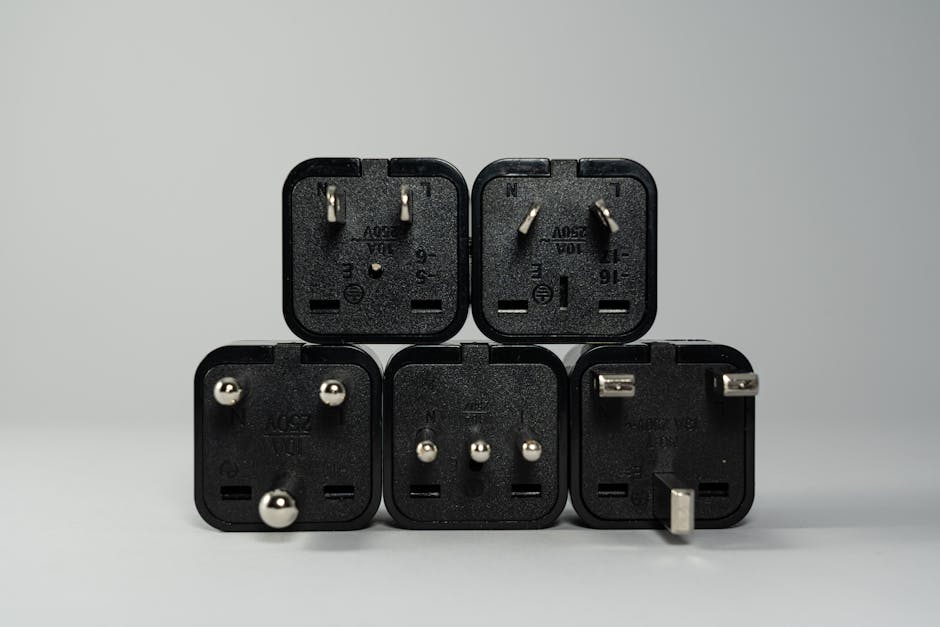
Spain primarily uses Type F power outlets, often called “Schuko” plugs. These are distinguishable by their two round pins and two grounding clips on the side of the plug, which connect with grounding contacts inside the wall socket. While many European countries also use Type C (two round pins, ungrounded) or Type E (two round pins and a hole for a male grounding pin), the Type F is the most common and safest option for Spain.
A Type C plug can often fit into a Type F socket, but it won’t provide a ground connection. For low-power, non-grounded devices like phone chargers, this is usually fine. For anything with higher power, or if you want maximum safety, always aim for a Type F adapter. It’s the most robust and secure fit for the Spanish grid.
Voltage and Frequency in Spain
Spain’s electrical system runs on 230 volts (V) and 50 hertz (Hz). This is critical. Most of North America uses 120V and 60Hz. If your device is only rated for 120V, plugging it into a 230V outlet without a voltage converter will likely destroy it. Always check your device’s charger or power brick. Look for text like “INPUT: 100-240V, 50/60Hz.” This means your device is dual-voltage and can handle Spain’s power without a separate converter. Most modern phones, laptops, and tablet chargers are dual-voltage, making your life much simpler.
If your device states only “120V” or similar, a plug adapter alone won’t be enough. You’ll need a voltage converter, which we will cover next. Ignoring these numbers is a fast track to fried electronics and a ruined vacation.
Choosing the Right Adapter Type: Basic vs. Universal

Once you understand Spain’s power, you need to pick the right adapter. There are two main types to consider: simple plug adapters and universal travel adapters. Each has its place depending on your travel style and device needs.
Simple Plug Adapters: Budget-Friendly Choices
These are basic, inexpensive adapters that convert your device’s plug shape to fit the Type F socket. They do not change voltage. They are small, light, and perfect if you only travel to Europe or want the absolute minimum to carry. For Spain, you’ll look for a Type F adapter. A common choice is the Ceptics Europe 2-Pack (Type F). You can often find a two-pack for around $8-12. These are great for basic needs, like charging a phone or a camera battery, especially if you know all your devices are dual-voltage. They are incredibly compact, typically weighing less than an ounce each, and have a simple, robust design that resists breaking. You just plug it into the wall, and your North American two or three-prong plug fits right in. No fuss, no extra features, just pure plug conversion.
However, their simplicity means they usually only allow one device per adapter. If you have a laptop, phone, and power bank all needing juice, you’ll need multiple adapters or a power strip combined with one adapter.
Universal Travel Adapters: For Multi-Country Trips
Universal travel adapters are more versatile. They often include multiple plug types (US, EU, UK, AU, etc.) in one unit, making them ideal for travelers visiting several regions or those who frequently travel internationally. Many universal adapters also integrate multiple USB ports (USB-A and often USB-C), eliminating the need for separate USB wall chargers for your phone, tablet, and smartwatches. This consolidation reduces clutter in your luggage.
A popular option is the EPICKA Universal Travel Adapter, which costs around $25-35. It typically includes 4 USB-A ports and 1 USB-C port, alongside the universal AC socket. This means you can charge up to six devices simultaneously from a single wall outlet in Spain, converting the plug type and distributing power efficiently. Another strong contender is the Tessan Universal Power Adapter with USB-C, usually priced similarly. It offers comparable features, often focusing on a sleek design and reliable power delivery. The main trade-off for these universal models is their larger size and weight compared to simple plug adapters. They are also more expensive. But the convenience of having one adapter for almost any country, plus multiple charging ports, often outweighs the bulk for many travelers.
Do You Need a Voltage Converter for Spain?
This is a common point of confusion. Many travelers assume an adapter changes voltage. It doesn’t. An adapter simply changes the physical shape of the plug. A voltage converter, on the other hand, *does* change the voltage. Most of the time, you won’t need one for Spain. But knowing when you do is crucial.
Identifying Dual-Voltage Devices
The vast majority of modern electronics, especially anything with a charging brick (laptops, phones, tablets, e-readers, smartwatches), are designed to be dual-voltage. This means they can safely accept input from 100V to 240V and 50Hz to 60Hz. Look closely at the small print on your device’s charger or power supply. You’ll typically see something like: “INPUT: AC 100-240V ~ 50/60Hz”. If your device displays this, it is dual-voltage, and you only need a simple plug adapter for Spain. No converter necessary. These devices internally regulate the voltage, so they are safe to use in Spain’s 230V system.
Even hair dryers, curling irons, and other personal care items are increasingly dual-voltage. Always verify before you pack. If you see the 100-240V range, you’re good to go with just an adapter.
When a Converter is Absolutely Necessary
If your device explicitly states an input voltage of only “110V-120V” and does not include the 220V-240V range, then you absolutely need a voltage converter. Plugging such a device directly into a 230V Spanish outlet will likely damage or destroy it, potentially causing sparks or even a fire. Common culprits are older hair dryers, curling irons, some travel irons, and certain power tools not designed for international travel. These devices lack the internal circuitry to handle the higher voltage. A voltage converter steps down the 230V from the wall to 120V, making it safe for your single-voltage device. However, voltage converters can be bulky, heavy, and expensive. They also often have wattage limits, so check the power draw of your device against the converter’s capacity. For instance, high-wattage items like hair dryers might require a powerful and costly converter. In many cases, it’s simpler and more cost-effective to buy a travel-specific, dual-voltage version of your item (like a travel hair dryer) or purchase an inexpensive one once you arrive in Spain.
Top Picks: Best Travel Adapters for Spain

Don’t overthink it. For Spain, you need a Type F plug. Here are my top recommendations, catering to different travel styles and needs. These picks balance reliability, features, and value, ensuring you stay powered without a hitch. This isn’t about vague recommendations; it’s about getting the exact tool for the job.
Best for Minimalists: Ceptics Europe 2-Pack (Type F)
If you’re traveling light and only need to charge a few dual-voltage devices like your phone, tablet, and earbuds, the Ceptics Europe 2-Pack is the way to go. These are simple, robust Type F plug adapters. They’re tiny, often sold in packs of two or more for around $8-12, and add almost no weight to your luggage. They convert your North American two or three-prong plug directly to the Spanish Type F socket. You get reliability without any unnecessary bulk or features. Just remember, these don’t offer USB ports or voltage conversion, so ensure your devices are dual-voltage and bring separate USB wall chargers if needed.
Best for Tech-Heavy Travelers: EPICKA Universal Travel Adapter
For those who travel with a laptop, multiple phones, a power bank, and a camera, the EPICKA Universal Travel Adapter is a powerhouse. This adapter typically offers a universal AC outlet, 4 USB-A ports, and 1 USB-C port. It handles a maximum power of 1875W at 230V, which is more than enough for simultaneously charging all your gadgets. The built-in surge protection adds an extra layer of safety for your expensive electronics. Priced around $25-35, it’s an investment that pays off in convenience, letting you charge up to six devices from a single Spanish outlet. Its sliding plug mechanism makes it adaptable to nearly any country, not just Spain.
Best for Families: Tessan Universal Power Adapter with USB-C
Traveling with a family means multiple devices vying for power. The Tessan Universal Power Adapter with USB-C is an excellent choice for this scenario. Similar to the EPICKA, it features a universal AC socket, multiple USB-A ports (often 3 or 4), and a crucial USB-C port, which is becoming standard for newer phones and laptops. This adapter typically supports up to 1875W at 230V and includes an 18W USB-C PD (Power Delivery) port for fast charging compatible devices like the iPhone 15 or many MacBook models. Its robust design and ability to charge numerous devices simultaneously make it ideal for keeping everyone’s tech ready. Expect to pay around $20-30 for this model, offering superb value for its capabilities.
A Quick Comparison: Key Features of Recommended Adapters
Choosing the right adapter means weighing features against your specific needs. This table summarizes the key aspects of the top picks for Spain, helping you make a quick, informed decision.
| Adapter Model | Type | Key Features | AC Outlets | USB-A Ports | USB-C Ports | Approx. Price (2026) |
|---|---|---|---|---|---|---|
| Ceptics Europe 2-Pack | Simple Plug | Compact, Lightweight, Basic Type F conversion | 1 | 0 | 0 | $8-12 |
| EPICKA Universal Travel Adapter | Universal | All-in-one, Surge Protection, High Power Output | 1 | 4 | 1 | $25-35 |
| Tessan Universal Power Adapter with USB-C | Universal | USB-C PD Fast Charging, Multi-Device Charging | 1 | 3-4 | 1 | $20-30 |
Understanding USB-A vs. USB-C Ports
When looking at universal adapters, the type and number of USB ports matter. USB-A ports are the older, rectangular standard. Most basic phone chargers and older accessories still use USB-A cables. USB-C ports are the newer, smaller, oval-shaped standard. They are reversible (no ‘right way up’) and often support faster charging speeds (Power Delivery or PD) for newer smartphones, tablets, and even laptops. If you have newer devices like an iPhone 15, a Google Pixel, or a MacBook, a USB-C PD port on your adapter will charge them significantly faster than a standard USB-A port. Prioritize adapters with at least one USB-C PD port if you own these devices.
Price Points and Portability
The price difference between a simple plug adapter and a universal one is significant. Simple plug adapters are cheap. They’re also incredibly portable, often fitting into any small pocket of your bag. Universal adapters are more of an investment, but they consolidate multiple items into one, potentially saving space in your main luggage by eliminating several individual USB wall bricks. While bulkier than a single plug adapter, a good universal adapter replaces a collection of single-country adapters and separate USB chargers, making your overall travel kit more streamlined. Consider how often you travel internationally and the variety of countries you visit. For a single trip to Spain, a simple Type F adapter is sufficient if you’re minimalist. For global adventurers, a universal option like EPICKA or Tessan is smarter.
Setting Up Your Devices in Spain: A Step-by-Step Guide

Getting your devices powered up safely in Spain is a straightforward process once you have the right adapter. Follow these steps to avoid common mistakes and ensure everything runs smoothly.
-
Step 1: Check Device Voltage
Before plugging anything in, locate the power specifications on your device’s charger or power brick. Look for the “INPUT” information. Confirm it states “100-240V, 50/60Hz”. This confirms your device is dual-voltage and safe to use with just a plug adapter in Spain. If it only lists 110V-120V, you MUST use a voltage converter, or better yet, leave that device at home and consider a dual-voltage alternative.
-
Step 2: Plug in Your Adapter
Insert your Type F travel adapter firmly into the Spanish wall socket. Ensure it’s fully seated. If you’re using a universal adapter, slide out the Type F (two round pins) prongs and then insert it into the wall. You should feel a secure connection.
-
Step 3: Connect Your Device
Now, plug your device’s charger (or your USB cable into the adapter’s USB port) into the travel adapter. If you’re using a universal adapter with multiple USB ports, you can connect several USB-powered devices simultaneously. For AC-powered devices, like a laptop charger, plug its standard North American plug directly into the universal adapter’s AC socket. Once connected, your device should begin charging normally. Always ensure the adapter feels cool or only slightly warm. If it becomes hot, unplug immediately.
Common Adapter Problems Solved: Q&A
Even with the right gear, questions pop up. Here are quick answers to common issues travelers face with power adapters in Spain.
Why is my adapter not working?
First, check the wall socket itself. Sometimes, a socket might be loose or inactive. Try another socket in the room. Second, ensure your adapter is fully inserted into the wall and your device’s plug is fully inserted into the adapter. Third, verify your device’s charger works independently; sometimes the issue isn’t the adapter but the device or its cable. Finally, if using a universal adapter, check for a small reset button or a fuse that might have tripped, especially after a power surge. Some universal adapters have a built-in safety fuse.
Can I use a UK adapter in Spain?
No, a UK adapter (Type G with three rectangular pins) will not fit into a Spanish (Type F with two round pins) wall socket. The plug shapes are completely different. While both countries are in Europe, their electrical plug standards are distinct. You will need a specific Type F adapter for Spain. Do not try to force a UK plug into a Spanish socket; it will not work and could damage the socket or the adapter.
Is it safe to charge multiple devices?
Yes, it is generally safe to charge multiple devices using a universal travel adapter that has multiple USB ports and an AC outlet, provided the adapter is from a reputable brand (like EPICKA or Tessan) and is rated for a sufficient wattage. These adapters are designed with internal circuitry to safely distribute power. However, be mindful of the adapter’s total wattage limit. For instance, an EPICKA adapter might be rated for 1875W at 230V. This means the combined power draw of all devices plugged into it (AC and USB) should not exceed 1875W. Charging a laptop, phone, and tablet simultaneously is usually fine, but avoid plugging in multiple high-wattage appliances like hair dryers or travel irons all at once unless your converter/adapter specifically states it can handle that load.
Always verify your devices are dual-voltage before heading to Spain.