Most Australia travel safety advice gets the threat model backwards. Tourists worry about snakes and spiders. The data says you’re far more likely to need help because of sun exposure, dehydration, or a car breakdown in a dead zone. Plan for those first. The wildlife stuff is mostly noise.
Smartraveller, the Australian government’s travel advisory service, consistently lists Australia as a low-threat destination for violent crime. But the environment doesn’t care about your itinerary. Heat kills more visitors than any animal ever will. Treat this guide as a risk-reduction checklist, not a fear list.
What the Incident Data Actually Shows
Royal Life Saving Australia reports that roughly 280 people drown in Australia each year. International visitors are overrepresented in that number. The pattern repeats: someone swims at an unpatrolled beach, gets caught in a rip current, and panics. Not a shark. Not a crocodile. A rip current.
Road fatalities in rural areas run about four times higher per capita than in cities. Fatigue, unfamiliar road conditions, and long distances between towns create the risk. A single-vehicle rollover on a remote highway is a far more realistic scenario than a snakebite.
Here’s the risk ranking that matters for most travelers:
| Risk | Relative Frequency | Preventable? | Primary Mitigation |
|---|---|---|---|
| Sunburn/heat exhaustion | Very high | Yes | SPF50+, 3L water per person per day, shade after 11am |
| Rip currents at beaches | High | Yes | Swim only between red and yellow flags |
| Rural road accidents | Moderate | Partly | No night driving outside cities, rest every 2 hours |
| Marine stings (jellyfish) | Low-moderate | Yes | Wear a stinger suit in tropical waters Oct-May |
| Snake/spider envenomation | Very low | Yes | Don’t walk through long grass barefoot; check shoes |
| Violent crime | Low | Partly | Standard urban awareness, avoid late-night train station car parks |
The takeaway: prepare for the boring stuff. Hydration, sun protection, swimming discipline, and road fatigue. That covers 95% of actual incidents.
Remote Travel: The Communication Gap That Gets People Killed
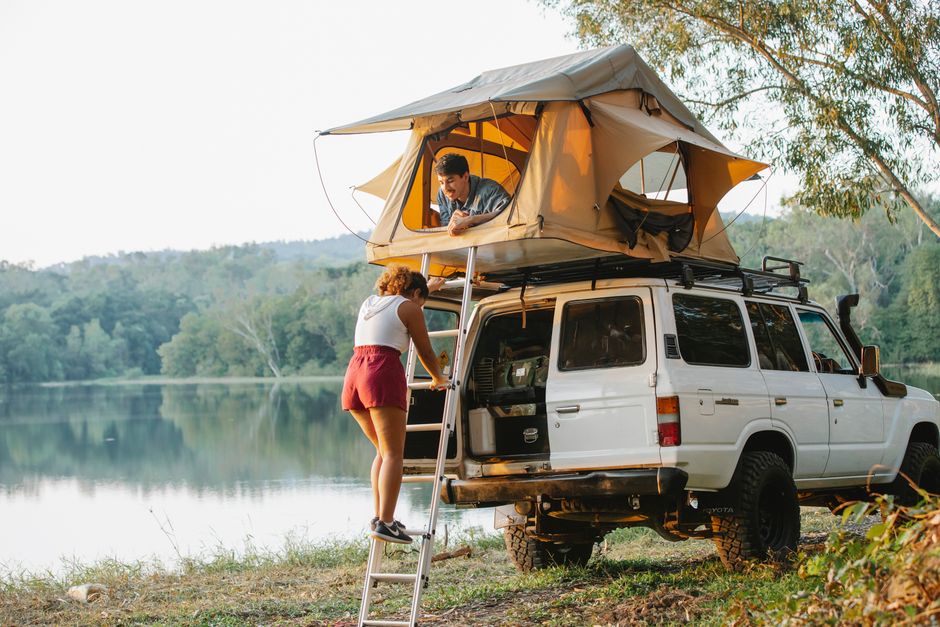
Australia’s outback has enormous dead zones. Telstra covers about 99% of the population but only about 30% of the landmass. That’s not a typo. Drive four hours west of any coastal city and your phone becomes a camera that occasionally gets a signal on a hilltop.
If you’re renting a car and doing any route marked “remote” on a map, you need a backup communication device. The Garmin inReach Mini 2 ($399 AUD, plus subscription) does two-way satellite texting and SOS. The ACR ResQLink 400 personal locator beacon (PLB) does SOS only but has no subscription fee. For most tourists doing a one-week road trip, the Garmin makes more sense because you can text “delayed, not an emergency” instead of triggering a full search-and-rescue response.
Rental companies like Britz and Apollo offer satellite phones as an add-on. Around $15 AUD per day. If you’re doing the Gibb River Road or the Oodnadatta Track, that’s cheap insurance.
One failure mode to avoid: assuming you’ll just flag down a passing car. On some outback routes, you might see three vehicles in a day. And they won’t necessarily stop. Carry at minimum 10 liters of water per person when driving remote stretches. Not 2 liters. Ten. A breakdown in 40°C heat turns fatal in hours, not days.
Beach Safety in 60 Seconds
Swim between the red and yellow flags. That’s it. That’s the entire system. Lifeguards place those flags where rip currents are weakest. If there are no flags, don’t swim. Full stop.
Rip currents don’t pull you under. They pull you out. The instinct to swim straight back to shore against the current is what exhausts and drowns people. Swim parallel to the beach for 20-30 meters, then angle back in. Or just float and raise one arm.
Wildlife: What Actually Requires Action
Most Australian wildlife safety advice is theater. You will not be attacked by a drop bear because drop bears don’t exist. You probably won’t see a snake. You might see a spider in a shed or a shoe. Here’s what actually matters:
- Box jellyfish (Chironex fleckeri): Tropical waters north of Agnes Water, Queensland, roughly October to May. Stings can kill in minutes. Wear a stinger suit ($20-30 AUD at any surf shop) or stay out of the water. Vinegar neutralizes stinging cells. Lifeguards stock it.
- Saltwater crocodiles: Northern Australia. Obey signage. Don’t camp within 50 meters of a water’s edge. Don’t clean fish near the water. Crocodiles are ambush predators. You won’t see the one that gets you.
- Snakes: Brown snakes and tiger snakes are venomous. They don’t chase people. Most bites happen when someone tries to kill or handle the snake. Leave it alone. If bitten, keep still, apply a pressure immobilization bandage, and call 000.
- Spiders: Funnel-web bites are serious but antivenom exists and no one has died since 1981. Redback bites hurt but are rarely fatal. Check shoes left outside overnight.
For every other animal — kangaroos, emus, wombats, sharks — the risk is mostly roadkill. Kangaroos jump in front of cars at dawn and dusk. That’s the real danger. Don’t drive at night in rural areas.
Urban Safety: The Advice Locals Actually Give
Australian cities are safe by global standards. Melbourne and Sydney rank consistently in the top 20 of the Economist Intelligence Unit’s Safe Cities Index. The risks that exist are the same as in any major city: petty theft, late-night alcohol-related violence, and scams targeting tourists.
A few specifics that trip people up:
Nightlife zones. King Street in Melbourne and Kings Cross in Sydney have improved but still see alcohol-fueled fights on weekends. The violence is mostly between drunk locals, not aimed at tourists. Don’t engage with aggressive drunks. Walk away.
Card skimming. Less common than in Europe or the US but it happens. Use tap-to-pay where possible. Avoid standalone ATMs in convenience stores. Use bank ATMs inside branches.
Ride-share verification. Always check the license plate against the app. Unlicensed drivers do operate around airports. If the car doesn’t match, don’t get in.
The one piece of advice that surprises visitors: don’t walk alone through large parks at night. Not because of crime rates — because of poor lighting and uneven paths. Twisted ankles are more common than muggings.
Insurance and Emergency Response: The Numbers You Need
Australia has a reciprocal healthcare agreement with 11 countries including the UK, Ireland, New Zealand, and several EU nations. That covers medically necessary treatment in public hospitals. It does not cover ambulance transport, which can cost $1,000+ AUD in some states. It also doesn’t cover repatriation or non-emergency care.
For everyone else, a hospital visit without insurance is expensive. A simple emergency department visit runs $300-600 AUD. A multi-day hospital stay can hit five figures. Travel insurance is not optional.
Emergency numbers: 000 for ambulance, fire, police. 112 works from mobile phones. 106 is the text-based emergency number for hearing or speech impaired.
The Royal Flying Doctor Service provides aeromedical retrieval in remote areas. It’s funded partly by government and partly by donations. If you need retrieval from a remote location, the RFDS will come. But the cost of that retrieval — which can exceed $50,000 AUD — falls on you or your insurer. Another reason insurance matters.
One failure mode tourists hit: assuming “free healthcare” means “free for me.” Australia’s Medicare system is for citizens and permanent residents. Visitors from non-reciprocal countries pay. Even reciprocal-country visitors pay for ambulance and dental.
The Pre-Trip Checklist That Covers 95% of Real Risks
Here’s the compressed version of everything above. Do these things and you’ve reduced your actual risk more than any amount of snake education ever will:
- Check Smartraveller for current advisories. It’s the Australian government site. Free, updated daily.
- Buy travel insurance with medical evacuation coverage. Check the fine print for remote area retrieval.
- If driving remotely, rent a satellite communication device. Garmin inReach Mini 2 or a PLB. Tell someone your route and expected check-in times.
- Pack SPF50+ sunscreen, a wide-brim hat, and a 2L+ water bottle. Buy a 10L water container for any remote driving days.
- Learn the rip current rule: swim between the flags or don’t swim.
- Download offline maps. Google Maps offline mode works. So does Maps.me. Cell coverage disappears fast outside cities.
- Save emergency numbers in your phone: 000, your insurer’s 24-hour hotline, your embassy or consulate.
That’s the list. It’s not exciting. It’s not about wrestling crocodiles or dodging funnel-webs. It’s about the boring, repetitive, unglamorous risks that actually put travelers in hospitals or worse. Australia is safe. But safe doesn’t mean consequence-free. The environment demands respect. Your job is to give it that respect without letting fear ruin the trip.