Hobart receives more than 1.2 million visitors annually despite having a population of just under 240,000 — making it one of Australia’s most visited cities relative to its size. Hotel rooms fill up fast, particularly during MONA FOMA in January and Dark Mofo in June. If you’re planning a trip and still haven’t locked in accommodation, that’s the first thing to fix.
The good news: Hobart is compact. Most hotels worth booking sit within a 10-minute walk of each other along the Sullivan’s Cove waterfront. The decision isn’t really about location — it’s about what experience you’re paying for.
Hobart’s Top Hotels at a Glance
Before getting into the details, here’s a side-by-side look at the properties that consistently come up in travel conversations about Hobart:
| Hotel | Avg. Nightly Rate (AUD) | Location | Best For | Standout Feature |
|---|---|---|---|---|
| The Tasman, Luxury Collection | $450–$850 | CBD waterfront | Luxury travelers, points earners | Heritage GPO building, Marriott Bonvoy |
| Henry Jones Art Hotel | $320–$620 | Hunter Street wharf | Art lovers, couples | Commissioned artwork embedded in 19th-century architecture |
| MACq 01 | $300–$550 | Waterfront, Murray Street | Story-driven experiences | Each room themed around a real Tasmanian historical figure |
| Islington Hotel | $350–$600 | South Hobart, 2km from waterfront | Boutique seekers, quiet stays | 11-room Regency mansion, mountain views, breakfast included |
| Old Woolstore Apartment Hotel | $200–$350 | Macquarie Street waterfront | Families, longer stays | Full kitchens, converted 1850s warehouse, parking available |
| Zero Davey | $180–$300 | Sullivan’s Cove | Mid-range travelers | Modern studios, strong central position, off-peak value |
| Lenna of Hobart | $200–$380 | Battery Point | History enthusiasts, quiet stays | Victorian mansion, 5 minutes to Salamanca Place |
Rates shift significantly during peak season — December to February and the Dark Mofo festival in June. Book the Tasman or Henry Jones at least three months out if you’re traveling during those periods. Availability disappears fast and prices climb hard.
What These Numbers Actually Mean
The rate ranges above reflect real-world booking windows, not advertised minimums. Off-peak midweek stays at Zero Davey can fall to around $160. The Tasman during Dark Mofo has exceeded $1,000 for suites. Treat these figures as calibration, not quotes — always check live rates for your specific dates.
The Waterfront Trio: Henry Jones, MACq 01, and The Tasman Compared
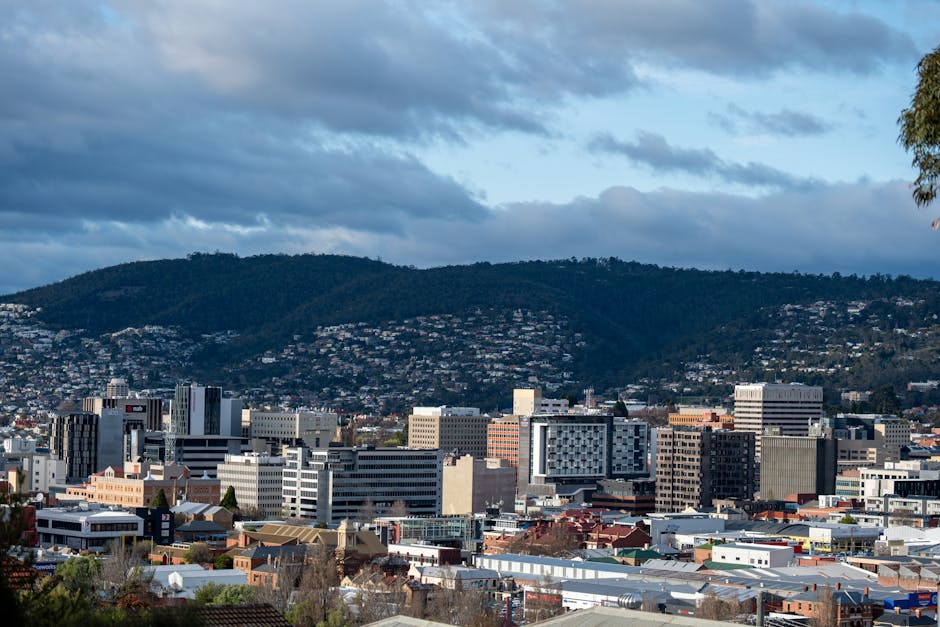
Three hotels dominate waterfront conversations in Hobart. They share a geography but are genuinely different products, and choosing the wrong one for your travel style is an easy mistake to make.
Henry Jones Art Hotel: Still the Benchmark
The Henry Jones Art Hotel opened in 2004 inside a 19th-century IXL jam factory on Hunter Street. It’s remained one of Australia’s most distinctive hotel concepts for over two decades — not because it’s the newest or flashiest, but because the integration of original sandstone, industrial heritage, and commissioned artwork feels authentic rather than staged.
Rooms vary significantly and that detail matters. The standard rooms are comfortable but smaller than you’d expect at $320+. The suites and loft rooms overlooking the working wharf are the point — double-height ceilings, original timber beams, harbor views that few Australian hotel rooms match. The IXL Long Bar draws non-guests too, and breakfast service is personal in a way that larger properties rarely manage.
Verdict: Best choice if heritage atmosphere is what you’re paying for. Book a suite or loft if budget allows — the standard rooms undersell the property considerably.
MACq 01: The Storytelling Hotel
MACq 01 opened in 2018 on Murray Street. The concept — rooms themed around real Tasmanian historical figures, with photography and written material embedded in the design — sounds gimmicky until you’re actually in the space. It’s executed with enough care that it adds texture to the stay. Rooms run larger than Henry Jones on average, bathrooms are better specified, and the Harbor Bar is genuinely good.
MACq 01 handles conference groups, which can affect atmosphere depending on when you visit. Worth checking if a corporate event coincides with your stay — a hotel full of delegates is a different experience from one running at leisure capacity.
The Tasman, A Luxury Collection Hotel: The Polished Newcomer
The Tasman opened in 2026 inside the former Hobart GPO building on Parliament Square. It’s Marriott’s Luxury Collection brand — consistent standards, points earning, and the operational reliability that independent boutiques sometimes can’t match. The spa, Asaya, is genuinely worth using. The rooms are the largest of the three waterfront properties.
What it lacks compared to Henry Jones is specificity. The Tasman is an excellent luxury hotel that happens to be in Hobart. Henry Jones could only exist in Hobart. That distinction matters to certain travelers and is completely irrelevant to others. For Marriott Bonvoy members, the decision is simple — the points value here is real and the property earns it.
Why the Neighborhood Decision Matters More Than the Room Grade
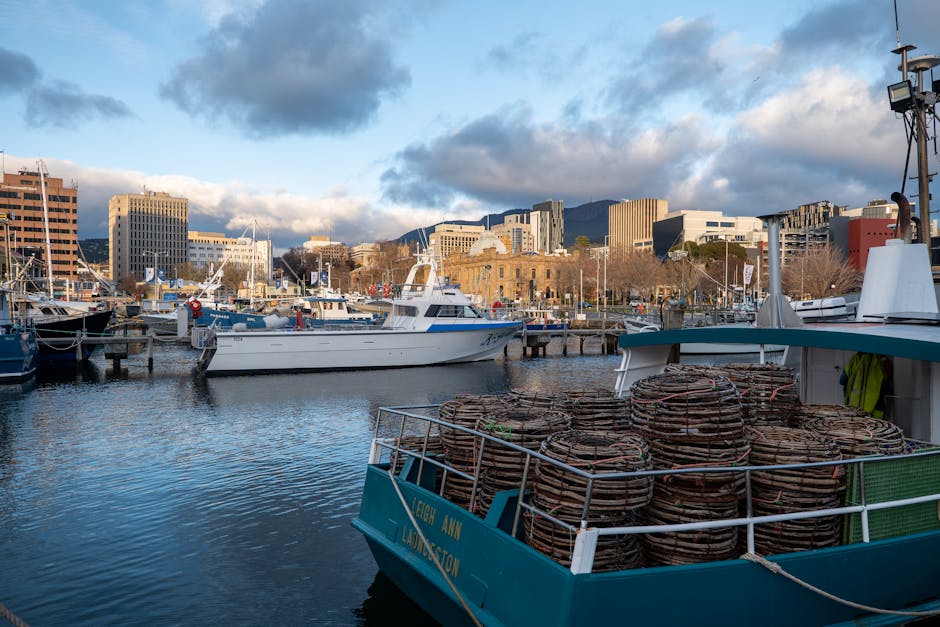
Hobart’s appeal isn’t inside the hotel. It’s the Salamanca Market on Saturday mornings, the Museum of Old and New Art (MONA) a 25-minute ferry ride upstream, kunanyi/Mount Wellington on a clear afternoon, and grilled flathead at the Constitution Dock floating restaurants. Where you stay shapes how easily you reach all of that.
The Sullivan’s Cove waterfront — where Henry Jones, MACq 01, and The Tasman all sit — gives you walking distance to Salamanca Place, Battery Point’s colonial streetscape, and the working dock. This is the right base for a first visit to Hobart, without qualification.
Battery Point is Hobart’s oldest residential neighborhood, sitting on the peninsula immediately south of Salamanca. Staying at Lenna of Hobart puts you in quieter streets lined with sandstone cottages and heritage pubs. It’s five minutes on foot to everything on the waterfront — but that five minutes separates you from Salamanca nightlife, which is either a clear benefit or a drawback depending entirely on your priorities.
The MONA Location Trap
Some visitors book accommodation near MONA itself in the suburb of Berriedale. This is almost always the wrong call. The MONA ferry from the Brooke Street Pier is one of the genuine highlights of any Hobart trip — a catamaran ride up the Derwant River with good coffee on board, mountain views in both directions, and a sense of arrival that sets up the museum experience perfectly. Staying near MONA removes that entirely for no meaningful benefit. The ferry costs around $28 return. Stay on the waterfront. Take the boat.
Three Booking Mistakes That Keep Costing Visitors Money
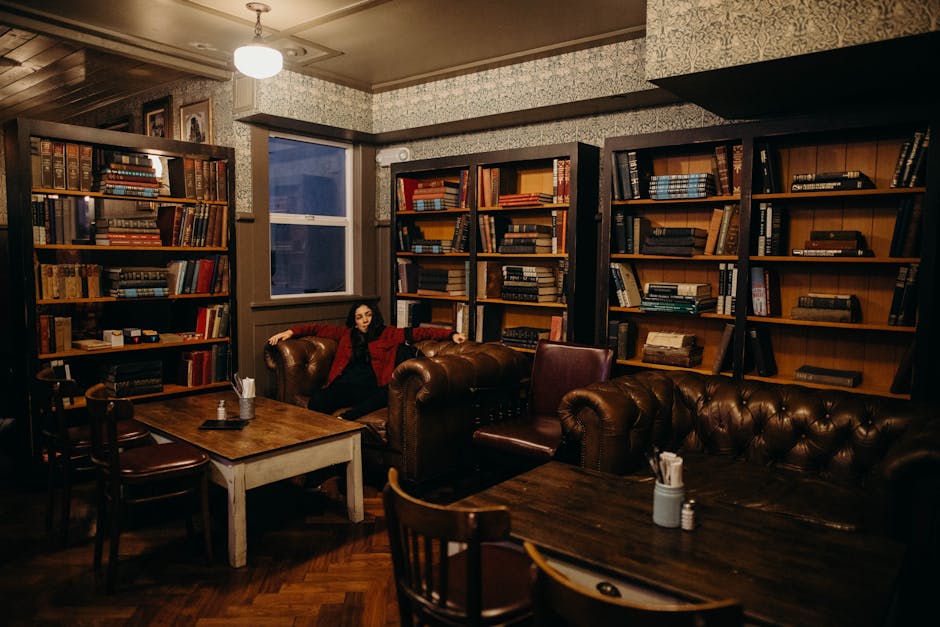
Hobart’s hotel market has specific patterns that catch people out repeatedly.
- Booking standard rooms at premium properties. At the Henry Jones Art Hotel, the gap between a standard room and a loft suite is roughly $150–$180 per night — but the experience gap is far larger than that. Standard rooms are pleasant but not distinctive. If you’re spending Henry Jones prices, spend the extra on the room that justifies the address. The loft suites are the product. Everything else is just a comfortable bed in a nice building.
- Ignoring Dark Mofo and MONA FOMA dates. Hobart’s two major festivals — Dark Mofo in June and MONA FOMA in January — drive occupancy to near-100% citywide. Rates double or triple. Booking four to six months ahead during those windows isn’t overcautious; it’s the minimum viable lead time. If you’re flexible on dates, traveling one week before or after a festival saves hundreds of dollars and results in a noticeably calmer city.
- Treating location as equivalent across price tiers. The Old Woolstore Apartment Hotel at ~$250/night sits on Macquarie Street, two minutes from the waterfront. Zero Davey on Davey Street is similarly positioned. Neither is as glamorous as the Tasman or Henry Jones, but the location advantage is essentially the same. For a five-night stay, the $150–$200/night difference adds up to $750–$1,000. That’s real money that’s better spent on dinner at Frank Restaurant on Morrison Street or a day trip to the Freycinet Peninsula.
One more, because it keeps catching people: always read cancellation terms. Hobart’s peak periods see aggressive non-refundable rate promotion. If your plans carry any uncertainty, the flexible rate — even at a premium — is almost always worth the cost.
Mid-Range Options That Actually Deliver
The strongest mid-range recommendation in Hobart right now is the Old Woolstore Apartment Hotel. The property is a converted 1850s woolstore on Macquarie Street — studios and one-bedroom apartments with full kitchens, reliable Wi-Fi, and parking options. Not exciting. Reliably comfortable. Families and travelers staying more than three nights will find the kitchen access genuinely useful given the quality of Hobart’s Salamanca Market produce and deli options.
Zero Davey — Boutique Stays cuts close to mid-range on price but punches above it on design. The apartments are modern and well-specified, and the Sullivan’s Cove location is hard to argue with. Off-peak rates can fall to around $160, which makes it exceptional value for the address.
What to Skip in This Tier
Several chain and motel-format properties along Liverpool Street and the northern CBD sit far enough from the waterfront — a 15-minute walk — that they meaningfully reduce the quality of a short Hobart trip. The city is small enough that proximity to the harbor matters in a way it wouldn’t in Sydney or Melbourne. Unless the price gap is extreme, the separation isn’t worth it.
The Islington Hotel: Its Own Category
The Islington doesn’t fit any standard tier comparison. It’s an 11-room boutique in a restored Regency mansion in South Hobart, about 2km from the waterfront. Breakfast is included. Rooms are individually decorated with antiques and original art. Mountain views from the upper-level rooms are legitimately striking on a clear morning.
It’s not right if you want to walk everywhere from your door. It is the right choice if you want the most personal, quietest hotel experience available in Hobart. At $350–$500, it competes directly with lower-end waterfront options — and for the right traveler, the Islington wins that comparison without much contest.
Questions Booking Sites Don’t Actually Answer
When is the best time to visit Hobart for hotel value?
March through May. Summer crowds are gone, weather remains mild, and hotel rates drop noticeably in April and May. The city feels like itself again after the festival season. June brings Dark Mofo, which spikes demand dramatically — that’s either a reason to visit or a reason to avoid, depending on your preferences for large outdoor arts events.
Do Hobart hotels include parking?
Most waterfront properties charge separately — typically $20–$35/night through arrangements with nearby car parks rather than on-site facilities. The Tasman, Henry Jones, and MACq 01 all work this way. Old Woolstore includes parking for certain room categories. Zero Davey has limited parking. If you’re driving from the Spirit of Tasmania ferry terminal or the airport, clarify parking before you book.
Can I use hotel loyalty points in Hobart?
The Tasman is the only major loyalty program property on the central waterfront (Marriott Bonvoy). Accor has some properties in greater Hobart but none at the premium waterfront addresses. If points redemption is central to your travel strategy, The Tasman is your only realistic option in this city — and it’s a solid one.
Is the waterfront area safe at night?
Yes, without qualification. Hobart is one of Australia’s safest cities. The Salamanca and waterfront area stays active most evenings, is well-lit, and presents no meaningful safety concern for visitors. This question comes up repeatedly from travelers unfamiliar with Tasmanian cities. It doesn’t need to.
Tasmania’s hotel market has been on a consistent upward trajectory for a decade, driven in large part by MONA’s outsized cultural gravity — a contemporary art museum that, against all expectations, became one of Australia’s most visited attractions and permanently reshaped how the world understands Hobart as a destination. What that trajectory produces over the next decade, as new properties arrive and existing ones refine their offer, will be interesting to watch.