
Most advice for solo travelers starts with “just walk up to someone at the bar.” That’s useless if your brain freezes in crowded rooms. The real problem isn’t that you’re shy — it’s that you’re trying to meet people in environments designed for extroverts. This guide skips the bar scene entirely. You’ll get a system that works with your quiet nature, not against it.
Why Hostels Are the Best (and Worst) Place for Introverts
Hostels are the default answer for solo travelers. They’re cheap, social, and everywhere. But for a shy person, a loud common room at 10 PM feels like a test you didn’t study for.
The Hostelworld Strategy ($3–$15/night booking fee)
Don’t book the cheapest dorm. Filter for properties rated 8.5+ on Hostelworld with “quiet” or “chill” in recent reviews. Look for hostels with a communal kitchen, not a bar. A kitchen forces natural interaction — someone asks to borrow salt, you ask about their recipe. No performance required.
Book a 4-bed dorm, not an 8-bed or 12-bed. Fewer roommates means lower noise and easier small talk. You only need one conversation to break the ice.
Free Walking Tours — The Low-Pressure Opener
Every major city has a free walking tour (tip-based, usually $10–$20). Show up 10 minutes early. Stand near the guide. After the tour, say one sentence: “That fact about the bridge was cool.” That’s it. The guide is paid to talk back. You’ve made contact without inventing a conversation.
Use GuruWalk (free app) to find tours rated by other solo travelers. Pick morning tours — people are fresher and more willing to grab coffee after.
Three Apps That Let You Skip the Awkward Phase
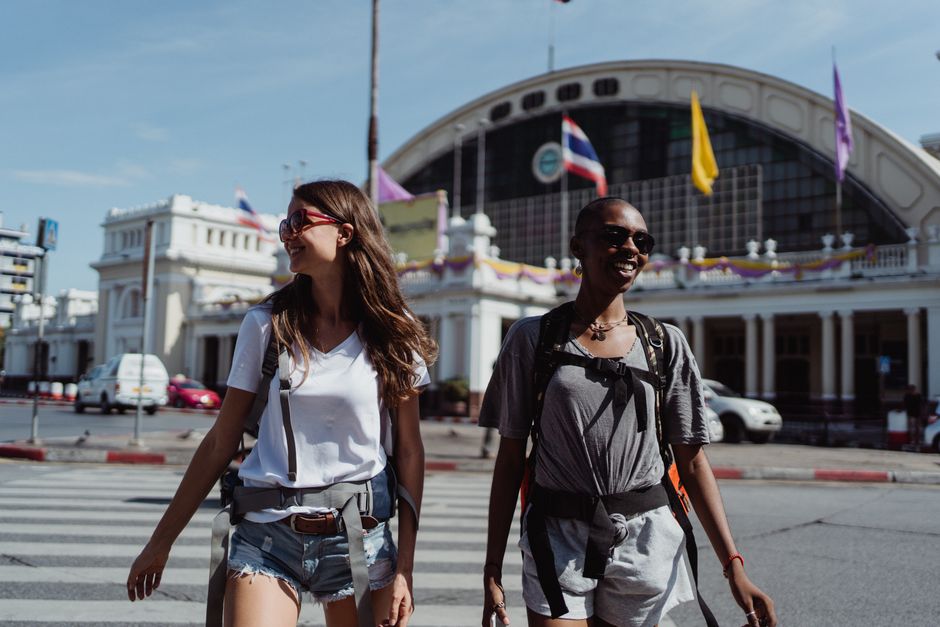
Apps reduce the friction. You skip the “Hi, where are you from?” dance and jump straight to shared interests. Here are three that work for shy travelers.
| App | Cost | Best For | One-Liner to Send |
|---|---|---|---|
| Meetup | Free | Hobby-based groups (hiking, board games, photography) | “First time at this group — nervous!” |
| Bumble BFF | Free (premium $19.99/month) | One-on-one coffee dates with other travelers | “Hey, I saw you’re also in Lisbon for a week. Want to grab pastéis de nata?” |
| Couchsurfing Hangouts | Free (verification $14.99/year) | Spontaneous group meetups in public spaces | “I’m at the park bench with a red backpack. Come say hi if you’re nearby.” |
Set a goal: send three messages per day. That’s it. If only one replies, you’ve got a plan. Most shy travelers fail because they wait for a perfect match. Send the message. The worst outcome is silence, which changes nothing.
The Structured Day Method — Build Connection Into Your Routine
Waiting for spontaneous magic is exhausting. Instead, design your day so that meeting people is a side effect of your schedule.
Break your day into three blocks:
- Morning (8–11 AM): Go to a local cafe with a book. Sit at the communal table. Say “hi” to the barista. That’s your social win for the morning.
- Afternoon (1–4 PM): Join a group activity with a clear task — a cooking class ($30–$60 on Airbnb Experiences), a pottery workshop, or a guided bike tour. Task-based environments remove the pressure to talk because you’re focused on the activity.
- Evening (6–8 PM): Eat dinner at the hostel kitchen or a food hall. Sit next to someone eating alone. Say: “What’s good here?” Short. Low risk.
This structure works because each interaction is bounded. You know exactly when it starts and ends. Your social battery doesn’t drain completely because you schedule recovery time between blocks.
What to Do When Your Social Battery Runs Out

You will hit a wall. It happens on day three or four. You’re in a beautiful city and you just want to hide in your room. That’s normal. The mistake is forcing yourself to socialize anyway.
Take a full day off. No tours. No apps. No conversations beyond ordering food. Spend it alone at a museum with headphones, or reading in a park. WhatsApp call a friend back home for 10 minutes. That counts as social connection — it refills the tank without draining you further.
When you’re ready again, start small. Go back to the morning cafe. Say “hi” to the same barista. You’ve already done this before. It’s easier the second time.
The One Question That Changes Everything

Here’s the trick that made solo travel click for me. Instead of asking “How do I meet people?” ask “How do I help someone?”
Offer to take a photo for a couple at a viewpoint. Hold the elevator door for someone with luggage. Share your phone charger at a cafe. These tiny actions create micro-connections without requiring a full conversation. Most of them last 10 seconds. But they train your brain to see strangers as potential helpers, not judges.
One photo request led to a two-hour chat in Kyoto. One shared charger turned into a dinner invite in Barcelona. Not because I was charming — because I offered something useful first.
You don’t need to become an extrovert. You just need one small interaction per day. That’s enough. That’s how a shy solo traveler builds a network, one quiet moment at a time.